3D Visualization Analysis: Improve ROI With Better Control
Key Takeaway (TL;DR)
3D Visualization Analysis: Improve ROI With Better Control Without strict oversight, 3D visualization analysis quickly becomes a drain on resources. Rendering cycles balloon by 40% sometimes more and integration delays
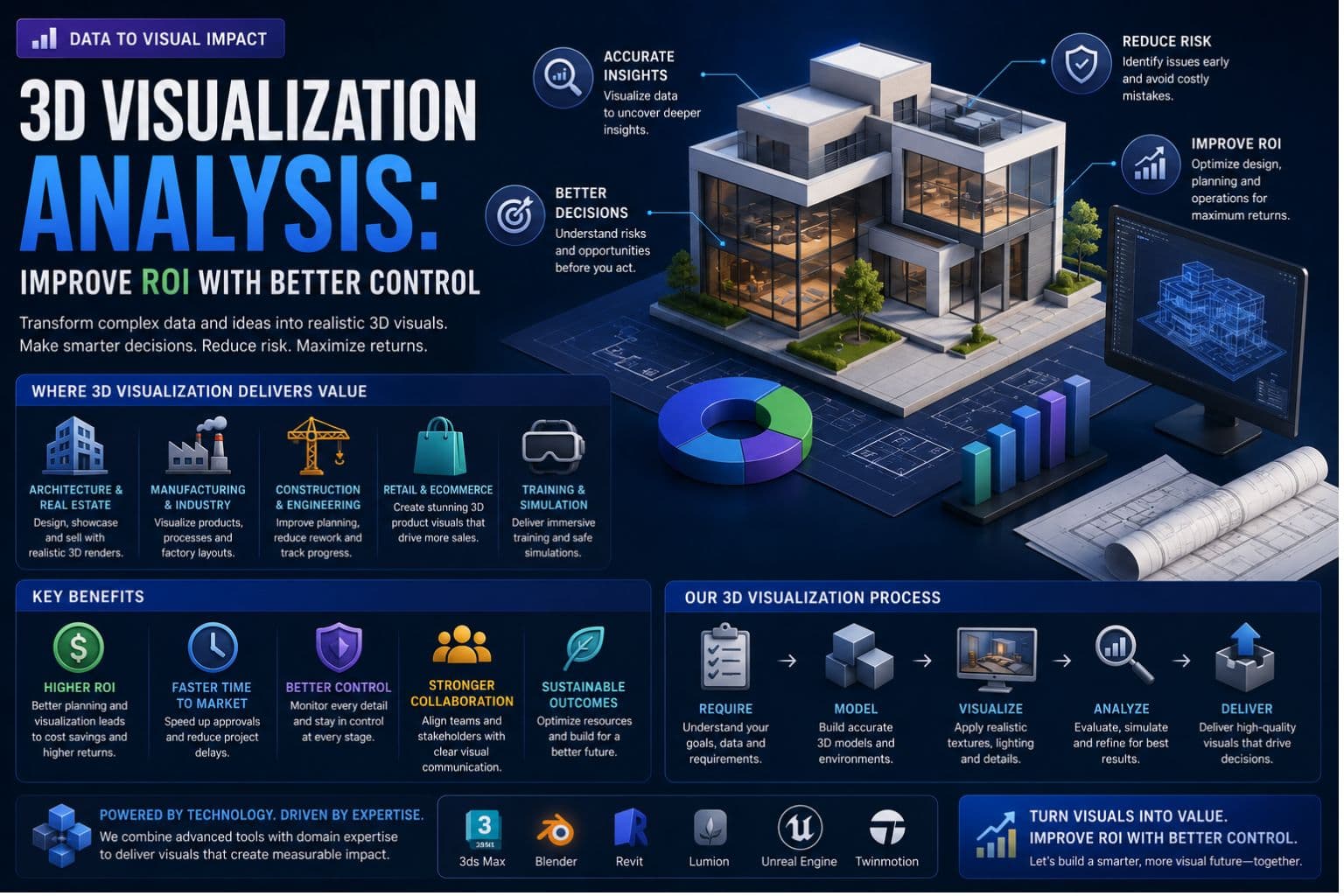
Without strict oversight, 3D visualization analysis quickly becomes a drain on resources. Rendering cycles balloon by 40% sometimes more and integration delays push project timelines into risk territory—undermining the intended ROI from visual assets in production delivery. It's one of those things you don't notice until it's too late.
What Poor Control Means for 3D Visualization ROI
In practice, losing control over 3D visualization analysis means teams approve revisions without version tracking. That leads to a 30% rework rate on assets that should have been finalized after the second pass—directly eroding returns through wasted compute and artist hours. And honestly, who tracks that mid-project?
Hidden Costs in Real-World Visualization Projects
A common blind spot: cloud infrastructure costs for rendering farms are rarely budgeted per iteration. So a project requiring 200 high-res frames for a client review can silently accrue thousands in overruns when approval cycles stall. A cost overlooked until the final invoice arrives—and then someone's surprised.
Common Missteps That Erode Returns in 3D Work
The biggest mistake teams make is treating visualization analysis as a post-modeling step rather than a gated process. That causes cascading failures when a lighting tweak in one asset breaks the integration architecture for an entire product line, forcing a full re-render cycle that delays deployment. It's not hypothetical, I've seen it happen.
Need Bringmark's engineers to implement this for you?
Get a free 30-minute architecture & growth review tailored to your stack.
How to Regain Control and Protect ROI
To decide effectively, implement a review cadence that freezes assets after each milestone, using a clear handover protocol that stops scope creep. For complex projects, bringmark's cross-discipline production hardening ensures visualization pipelines stay aligned with actual delivery constraints—not speculative revisions. Keeps things grounded.
FAQ
q What is the main factor that reduces ROI in 3D visualization analysis?
a The primary factor is lack of revision control, which causes unplanned rework and extended rendering cycles that inflate project costs against the initial budget. It adds up fast.
q How do integration delays affect 3D visualization project outcomes?
a Integration delays occur when asset updates break existing pipelines, requiring full re-renders that push delivery timelines back and increase the risk of missed client milestones. One tweak, and everything stalls.
q At what point does scaling 3D visualization analysis become unsustainable?
a It stops scaling when the number of concurrent projects exceeds the team's capacity to track version history manually, leading to errors in asset linkage and cost overruns that undermine ROI. Manual tracking just doesn't work past a point.
q When should teams reconsider their approach to 3D visualization control?
a Teams should reconsider when approval workflows involve multiple stakeholders without a single decision authority, as this creates feedback loops that drive up rendering costs and delay final deployment. Too many cooks, literally.
The core engineering, AI, cloud, and product development team at Bringmark Private Limited. We architect and operate production SaaS platforms, enterprise web applications, and resilient cloud infrastructure.