React Native Development Best Practices for Compliance This Week
Key Takeaway (TL;DR)
React Native Development Best Practices for Compliance This Week Following React Native development best practices for compliance this week is essential when your team is under pressure to deliver a secure, auditable mob
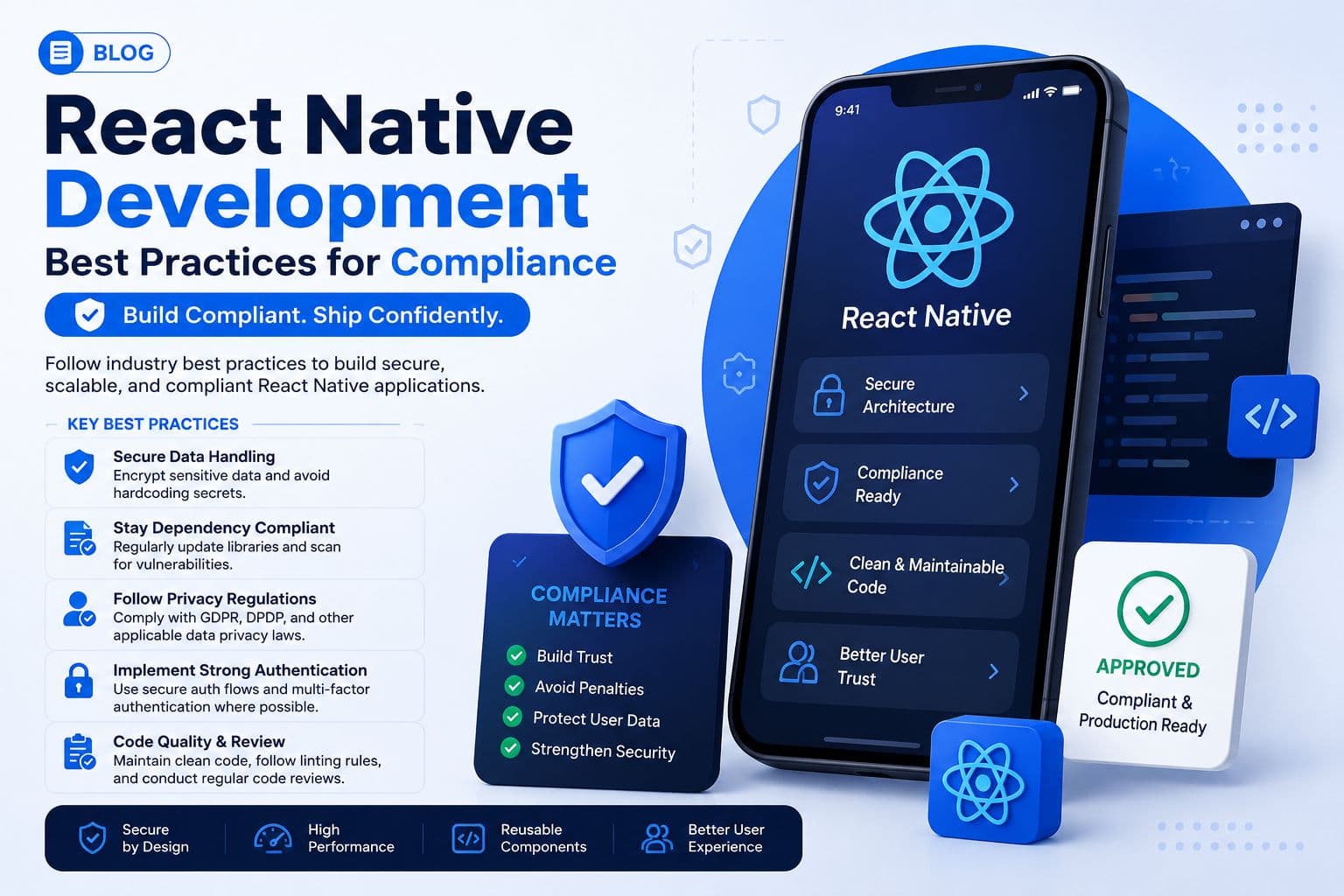
Following React Native development best practices for compliance this week is essential when your team is under pressure to deliver a secure, auditable mobile application without introducing deployment delays. In many live projects — and I've seen this happen more times than I'd like to admit — the difference between a smooth release and a last-minute compliance failure comes down to how early you bake regulatory requirements into your build pipeline and testing cycles. Get that wrong early, and you're looking at a very long Friday night.
What Compliance Really Means in a React Native Delivery
Compliance in a React Native context means ensuring your application meets specific data protection regulations such as GDPR, HIPAA, or SOC 2, which directly impacts how you handle user data, manage dependencies, and structure your codebase for audit readiness. A common oversight — and honestly one I've caught on several projects — is that teams focus only on network encryption while forgetting that local storage in AsyncStorage or third-party libraries can create compliance gaps that surface during integration architecture reviews, usually right when you think you're done.
Why Many Teams Discover Compliance Gaps Too Late
In real enterprise deployments, compliance issues often emerge during QA testing cycles when security scans flag unencrypted data or unused permissions, causing the project deployment to freeze while legal and engineering teams scramble for a fix. One non-obvious operational detail — something that consistently trips up even experienced teams — is that your continuous integration pipeline must include automated compliance checks for every pull request, otherwise a single outdated library can break your entire release management schedule and trigger client delivery timeline violations. Trust me, that conversation with the client is not fun.
The Common Mistake That Undermines Secure Code
The most frequent error we observe is assuming that using a well-known state management library or a popular third-party SDK automatically guarantees compliance, when in reality each dependency introduces its own data handling patterns that must be verified against your governance requirements. This assumption stops scaling when your application integrates with multiple enterprise backend systems, because what works for one API endpoint may expose sensitive data in another due to differences in authentication token handling or session management. I've literally sat in a room where someone said "but it worked in staging."
Need Bringmark's engineers to implement this for you?
Get a free 30-minute architecture & growth review tailored to your stack.
How to Make the Right Decision on Scope and Architecture
To avoid costly rework cycles, teams should define compliance boundaries at the start of the sprint, mapping which data fields require encryption at rest, which analytics can be collected, and how push notifications must be configured to avoid regulatory violations. A common misunderstanding is thinking a single security library can cover all compliance needs, when in practice you need a layered approach combining code reviews, dependency scanning, and infrastructure hardening, which is where bringmark can support cross-discipline execution from devops pipelines to production hardening to keep your delivery timeline intact. Honestly, it's about knowing where the gaps are before your auditor does.
FAQ
q What are the top React Native compliance requirements for a healthcare app?
a The top requirements include encrypting all patient data both in transit and at rest using AES-256, implementing role-based access control for local databases, and ensuring all third-party analytics tools are configured to avoid transmitting protected health information through backend services or cloud infrastructure. Don't skip the local storage audit — that's where I've seen most failures happen.
q How can I test if my React Native app is compliant before the audit?
a You can run automated static analysis tools like ESLint with security plugins, integrate dependency vulnerability scanners like Snyk or npm audit directly into your CI pipeline, and perform manual code reviews focused on data flow from user input to external storage, including checking for any hardcoded API keys in your version control history. Also, actually trace the data path — sometimes what you think is happening isn't what the code is doing.
q What happens if a third-party library in my React Native app violates compliance rules?
a The library must be immediately removed or replaced with a compliant alternative, which can cause significant scope creep and rework cycles in your sprint, so it is wise to audit all dependencies for their data handling policies before the development phase and enforce a strict approval process for any new library additions. I've seen this single issue delay a release by three weeks.
q Can I achieve compliance without slowing down my deployment frequency?
a Yes, but only if you embed compliance checks into your automated release management pipeline from day one, so that every build is automatically validated against your regulatory checklist, allowing your team to catch issues early in QA testing cycles instead of scrambling during the final handover and risking a deployment delay that breaks your client delivery timeline. It's not easy but it's absolutely doable — we've done it on several projects now.
The core engineering, AI, cloud, and product development team at Bringmark Private Limited. We architect and operate production SaaS platforms, enterprise web applications, and resilient cloud infrastructure.