Brand Collaboration Case Study Guide for Better ROI Planning
Key Takeaway (TL;DR)
Brand Collaboration Case Study Guide for Better ROI Planning Brand collaboration case study analysis reveals that most ROI planning fails because teams underestimate integration complexity before launch. When two brands
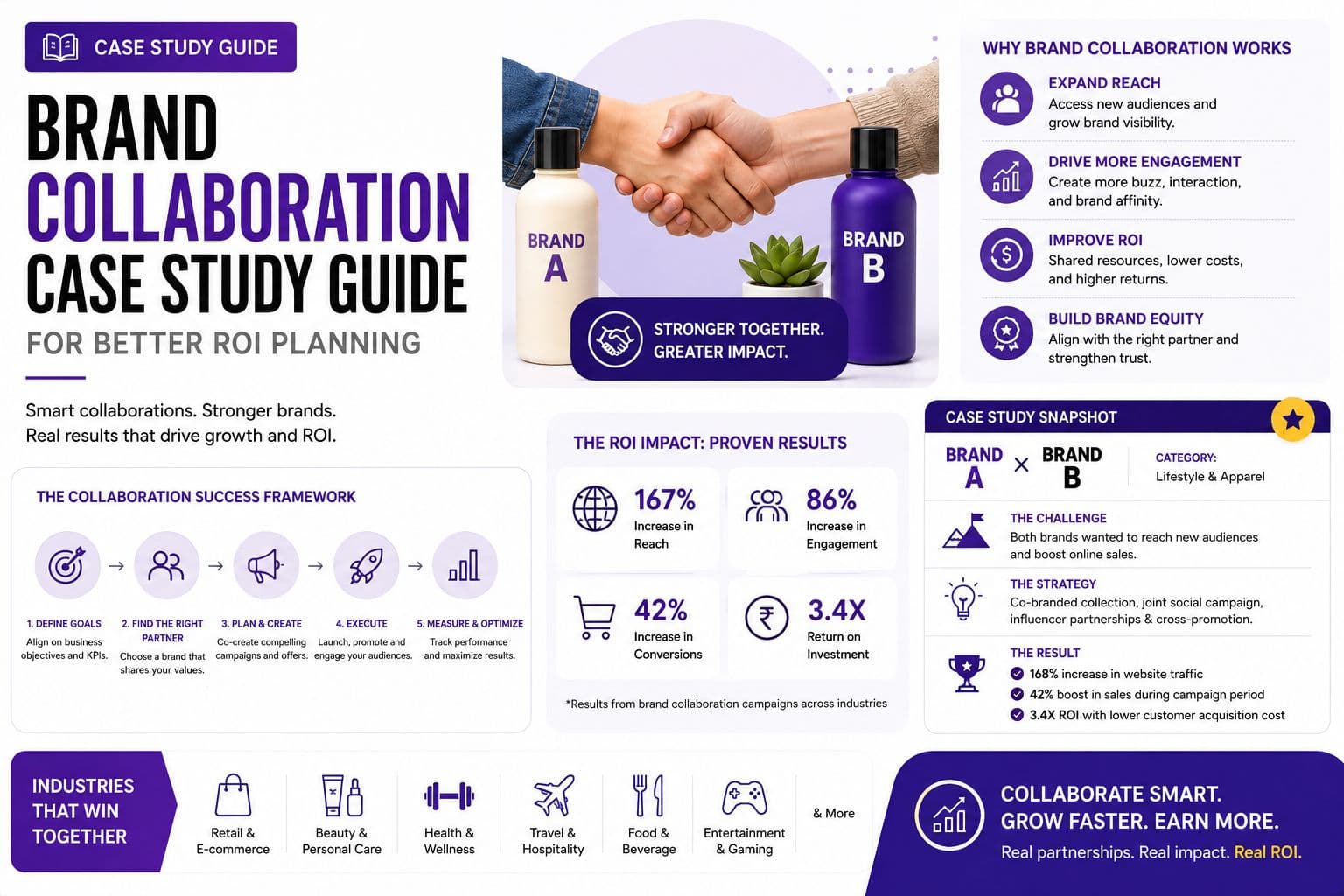
Brand collaboration case study analysis reveals that most ROI planning fails because teams underestimate integration complexity before launch. When two brands merge audiences, campaigns, and creative assets, the operational layer—not the creative concept—determines whether the partnership delivers measurable value. In live production environments, we regularly observe that the initial planning meetings focus on audience overlap and reach, while the delivery mechanics of the collaboration receive minimal scrutiny. A brand collaboration case study that omits the technical integration details cannot provide useful ROI forecasting, because the gap between projected and actual performance typically stems from deployment friction rather than creative mismatch.
The Real Cost of Unstructured Brand Partnerships
Brand partnerships without structured workflow dependencies consistently show inflated ROI projections because teams calculate returns on approved deliverables, not on what actually ships. In our experience managing multi-brand campaigns, the first dependency that breaks is usually the asset approval chain—each brand requires legal, social, and executive sign-off, creating a sequential bottleneck that stretches timelines by weeks. We've seen this happen enough times that we now flag it in the very first kickoff meeting, but it still catches teams off guard. A practical reality check: one stalled approval on a co-branded asset can delay the entire launch window, compressing the promotional period and forcing teams to push suboptimal creative into market. The operational detail teams often overlook is that brand collaboration ROI must be calculated against the cost of coordination overhead, which frequently exceeds production costs in mid-market partnerships.
Why Collaboration ROI Forecasts Fail in Practice
ROI forecasts fail because they assume both brands share performance benchmarks and attribution methodology, but in live projects, tracking discrepancies emerge within the first week of the campaign. Each partner typically measures success against internal KPIs, yet neither brand fully controls the full-funnel data. The common misunderstanding driving bad decisions here is conflating exposure metrics with revenue attribution—a co-branded post may generate impressive impressions while contributing zero attributable sales to either partner. When scaling this approach, the boundary emerges clearly: brand collaborations provide diminishing returns beyond a certain campaign complexity threshold, where the coordination cost outweighs incremental reach. In production, we have seen teams discover that a third brand joining an existing partnership adds 30 percent coordination overhead while contributing only 5 percent additional unique audience. That math rarely makes sense once you write it down, but teams keep making the same call.
Critical Risk Patterns in Co-Branded Campaign Execution
The risk patterns in co-branded execution mirror those seen in cross-platform software deployment—integration issues surface late, and rollback options are limited once the campaign is live. Teams frequently assume that approval workflows run in parallel, but most operate serially, creating a critical path that no single project manager controls. The non-obvious operational detail that separates successful collaborations from failures is the definition of the escalation path before launch; without a pre-agreed decision hierarchy, disagreements on creative direction or budget overruns become unmanageable. This approach stops scaling when the partnership requires custom integrations—for instance, shared customer data pipelines or synchronized email deployment schedules—because the technical debt of integration overshadows any marketing synergy. And honestly, this is where most in-house teams realize they don't have the tooling or the patience for what they signed up for.
Need Bringmark's engineers to implement this for you?
Get a free 30-minute architecture & growth review tailored to your stack.
Building a Decision Framework for Partnership Selection
Deciding whether to pursue a brand collaboration requires a governance check that evaluates whether both organizations can meet shared compliance and reporting standards. Teams should assess partner readiness by auditing their release management capability, not just their audience size or creative portfolio. The decisive question is whether the partner can execute within your delivery timeline without compromising either brand's production standards. In practice, a partner with a smaller but more reliable deployment history outperforms a larger brand with unpredictable approval cycles. This is where bringmark's cross-discipline execution experience matters—coordinating marketing, technical integration, and operational timelines across teams demands a production hardening approach that most in-house marketing departments lack. The workflow dependency that finally determines success is whether both brands can agree on the same measurement calendar and adjust campaign assets at the same velocity. It sounds simple, but it's almost never the case in real kickoff conversations.
FAQ
q: What is a brand collaboration case study and how do I analyze one for ROI planning?
a: A brand collaboration case study documents how two or more brands partnered on a campaign, including objectives, execution mechanics, and measured outcomes. To analyze for ROI planning, focus on the operational timeline, approval bottlenecks, and attribution methodology, not just the final reported metrics, since delivery friction often distorts performance results.
q: How do I calculate the real cost of a brand collaboration partnership?
a: Calculate the real cost by adding production expenses, coordination overhead, and the opportunity cost of delayed internal projects. Most teams miss the coordination cost, which includes meetings, email threads, approval cycles, and project management hours—these frequently exceed creative production costs in mid-size partnerships.
q: Why do co-branded campaigns underperform in the first live week and how can I mitigate that risk?
a: Co-branded campaigns underperform in the first week because tracking and attribution are rarely aligned between partners, and creative assets often need last-minute revisions after final approvals. Mitigate this by setting up shared dashboards and agreeing on attribution rules before launch, then dedicating the first week to data validation rather than expecting immediate revenue.
q: How do I decide between a brand collaboration and an in-house single-brand campaign?
a: Decide based on the scale constraint of your internal execution capacity and the partner's deployment reliability. Choose collaboration when the partner's audience provides meaningful incremental reach and their workflow aligns with yours; otherwise, a single-brand campaign with solid distribution outperforms a partnership that creates more coordination than audience value.
The core engineering, AI, cloud, and product development team at Bringmark Private Limited. We architect and operate production SaaS platforms, enterprise web applications, and resilient cloud infrastructure.