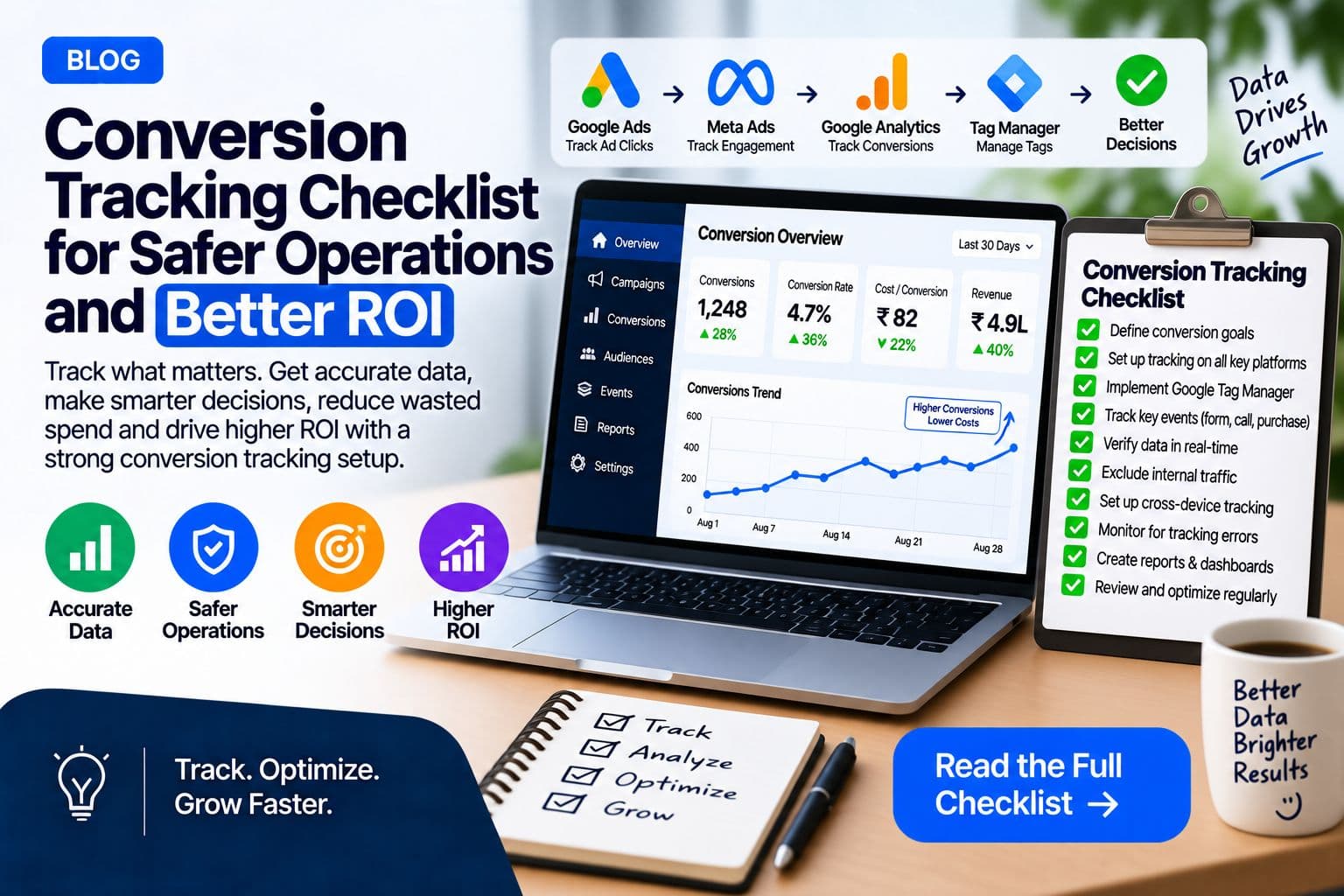
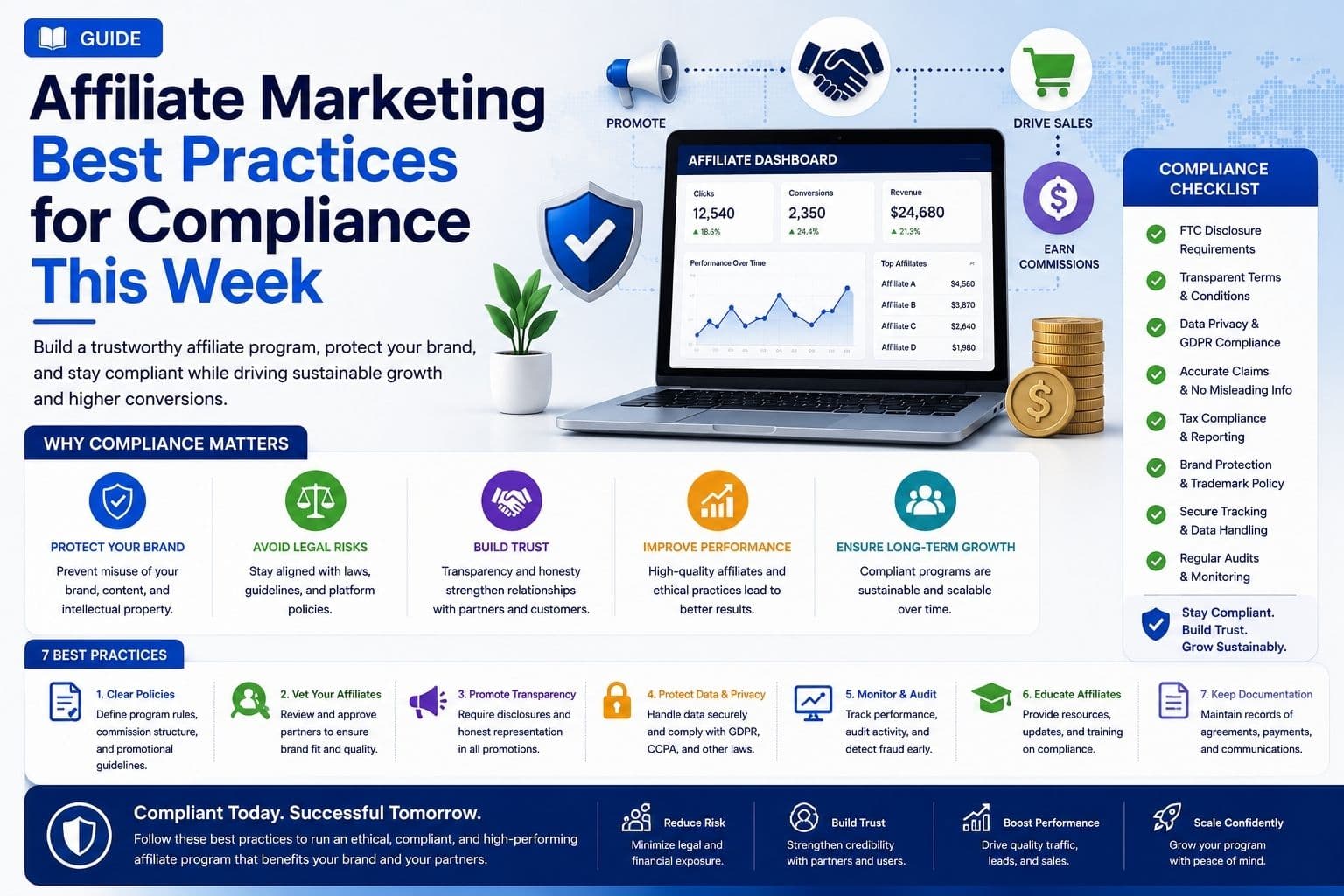
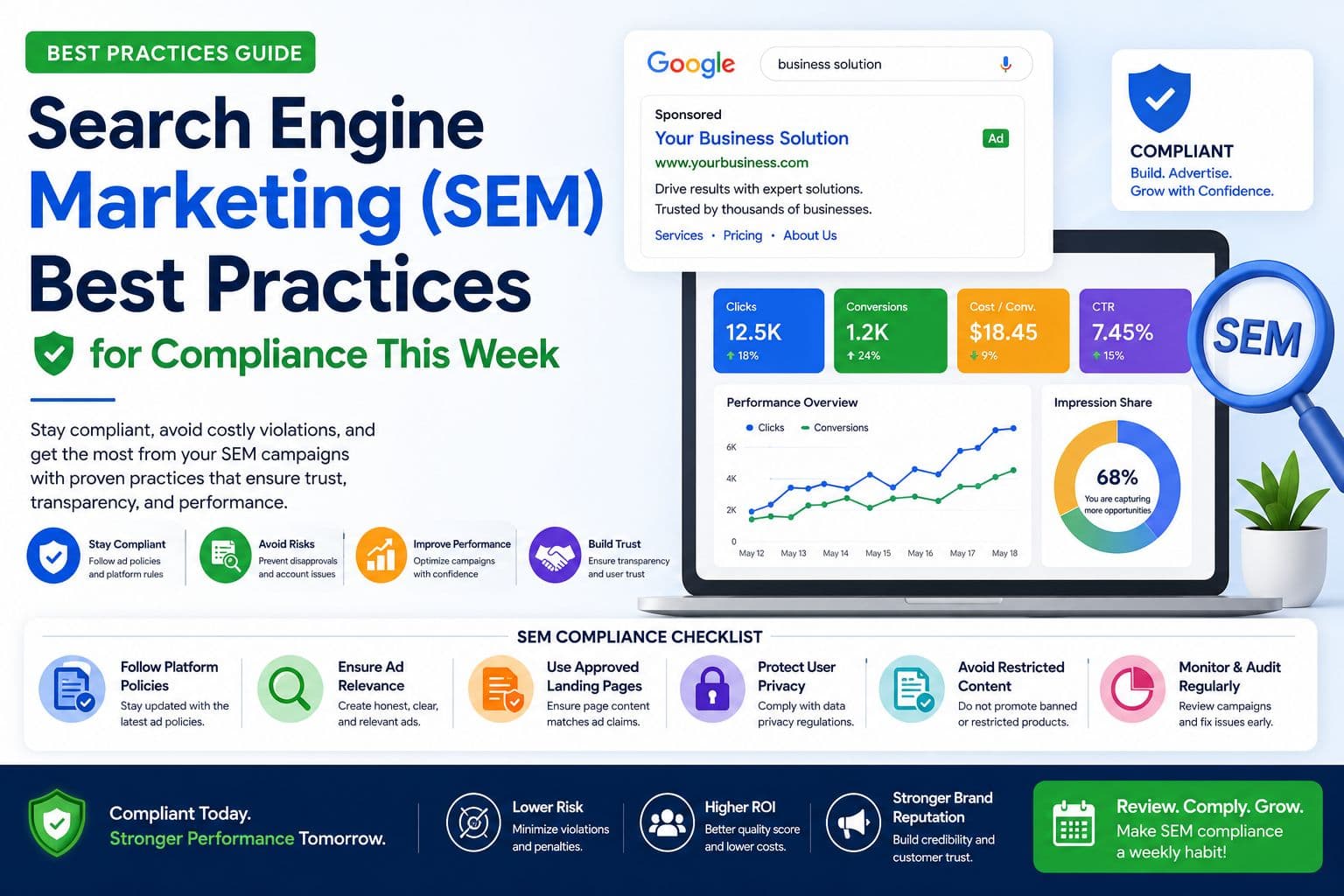
Conversion Tracking Best Practices for Compliance This Week
Key Takeaway (TL;DR)
Conversion Tracking Best Practices for Compliance This Week When a marketing team rolls out a new campaign, the initial focus is usually on creative and budget, but the real operational pressure hits when conversion trac
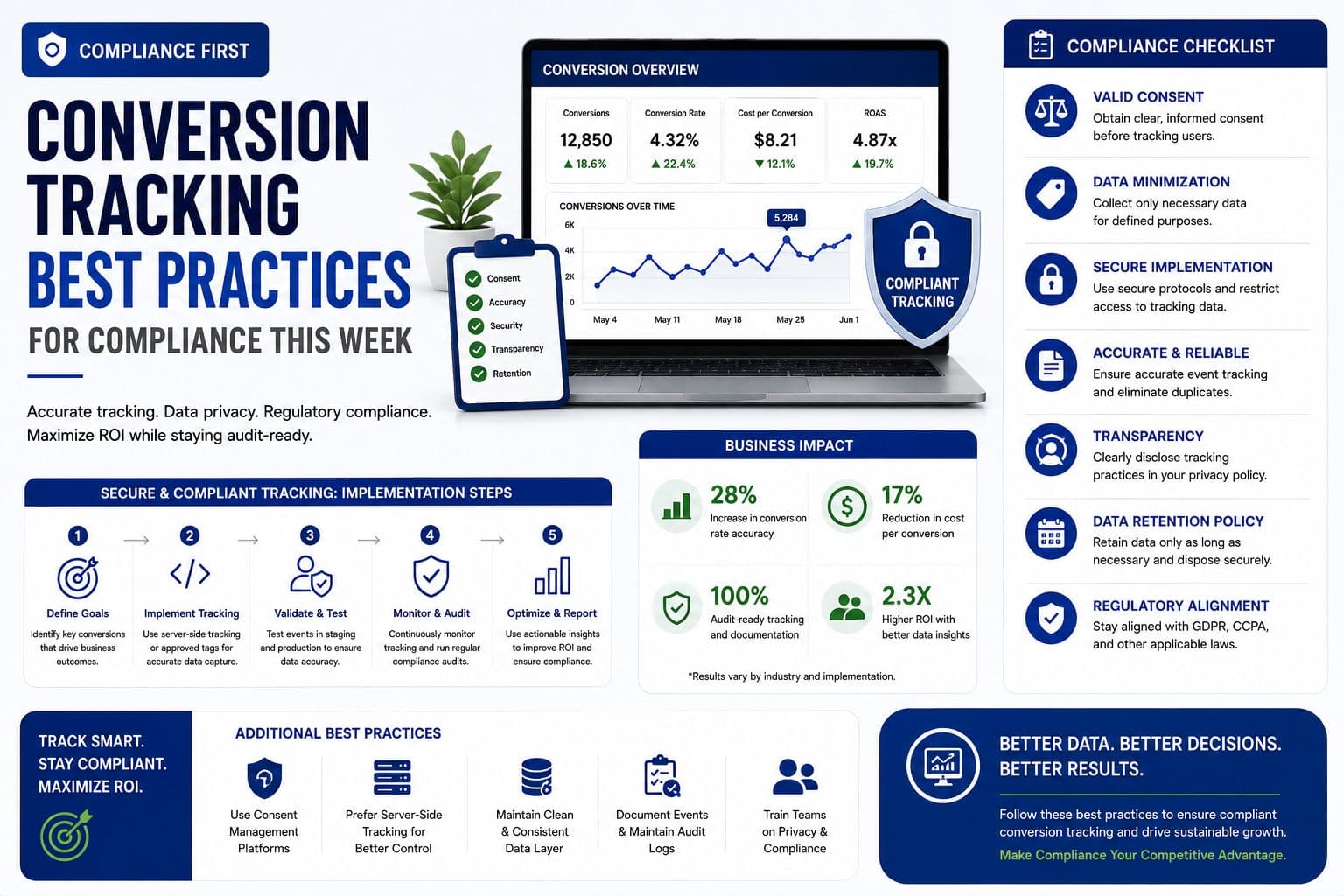
When a marketing team rolls out a new campaign, the initial focus is usually on creative and budget, but the real operational pressure hits when conversion tracking must align with compliance standards. A common real-world scenario involves a third-party script firing before user consent is captured, which not only skews the data but also creates a legal exposure that the project manager discovers only during a mid-week audit — and usually it's the finance team that spots it first, not the engineers.
Understanding the Scope of Compliance in Conversion Tracking
In live production, compliance in conversion tracking is not just about ticking a box for GDPR or CCPA; it is about ensuring that every data point collected has a legitimate legal basis and a defined retention period. Teams often overlook that the same pixel used for retargeting might also be pulling in personally identifiable information (PII) that requires separate handling under new privacy regulations. The workflow dependency here is clear: your tag management system must be the single source of truth for what fires and when, otherwise, you risk breaking the consent chain that maintains data integrity — though honestly, in practice, most teams don't realize how fragile that chain is until something actually breaks.
The Reality of Data Loss and Reporting Discrepancies
On a recent project, we observed that after updating a privacy policy, the conversion rate dropped by 20% overnight. The immediate assumption was a technical bug, but the reality was that the consent management platform (CMP) was now blocking tracking scripts for users in specific regions, leading to unmeasured conversions. This operational detail is often missed because the QA testing cycles only cover desktop browsers with granted consent, not the mobile in-app browsers where users frequently deny tracking. This discrepancy forces a hard decision: either accept the 'dirty' data or invest in server-side tracking to maintain a clear view of the funnel without violating user choice — and that decision usually lands on someone's desk on a Thursday afternoon with no real time to evaluate it properly.
Common Mistakes That Cause Compliance Failures
The most common mistake is treating conversion tracking as a single deployment event rather than a continuous governance process. Many teams assume that once the tracking plan is approved, the work is done, but this creates a high risk when marketing agencies or freelance developers inject new parameters into URLs without updating the data layer documentation. This incorrect assumption leads to a scenario where the marketing team reports revenue based on a session-scoped event, while the finance team sees a user-scoped transaction, resulting in a cost overrun in wasted ad spend and a handover failure during the monthly review. The boundary where this approach stops scaling is when multiple teams start editing the same properties without a version control system for the tag containers — and once you hit that point, trying to untangle what changed and when becomes a nightmare that nobody wants to own.
Need Bringmark's engineers to implement this for you?
Get a free 30-minute architecture & growth review tailored to your stack.
How to Decide on the Right Tracking Architecture
When deciding whether to use client-side pixels, server-side tagging, or a hybrid model, the decision must be based on the risk tolerance of your organization and the complexity of your digital marketing stack. If you are running a simple lead generation site, client-side tracking with a robust CMP might be sufficient, but if you sell through a complex funnel involving a CRM and a custom checkout, you need to prioritize server-side tracking to ensure data accuracy. A non-obvious detail teams overlook is the need for a data retention policy that automatically purges user-level logs after a set period, which is a core part of maintaining compliance — and honestly, it's usually the last thing anyone thinks about until an auditor asks the question. In these cross-discipline scenarios, having a partner who understands both the technical architecture and the legal constraints is invaluable; this is where bringmark provides the production hardening needed to ensure your deployment doesn't break under audit pressure.
FAQ
q What are the basic compliance requirements for setting up conversion tracking without getting flagged?
a The basic requirement is to have a consent management platform (CMP) that blocks all tracking scripts before user consent is given, ensuring that you only process data with legal validation.
q How can I prevent data loss from users blocking tracking scripts while still maintaining accurate reports?
a You should migrate to server-side tracking where the conversion event is sent from your server to the ad platform, bypassing the browser's ad blockers and matching the data with consent.
q What scale constraints should I consider when scaling conversion tracking across multiple domains or countries?
a As you scale, you must handle regional differences in privacy laws (like GDPR vs. CCPA) and ensure that your tag management system can route data based on geolocation without causing latency.
q We are seeing a mismatch between our CRM and ad platform numbers, who is responsible for investigating this issue?
a This usually indicates a workflow dependency failure where the development team updates the data layer but fails to coordinate with the marketing team; you need a clear ownership document that defines who manages the conversion tags in production.
The core engineering, AI, cloud, and product development team at Bringmark Private Limited. We architect and operate production SaaS platforms, enterprise web applications, and resilient cloud infrastructure.