Cross Platform App Development Guide: Cut Costs with One Codebase for iOS and Android
Key Takeaway (TL;DR)
Cross Platform App Development Guide: Cut Costs with One Codebase for iOS and Android When teams ask for a cross platform app development guide to cut costs with one codebase for iOS and Android, the real challenge begin
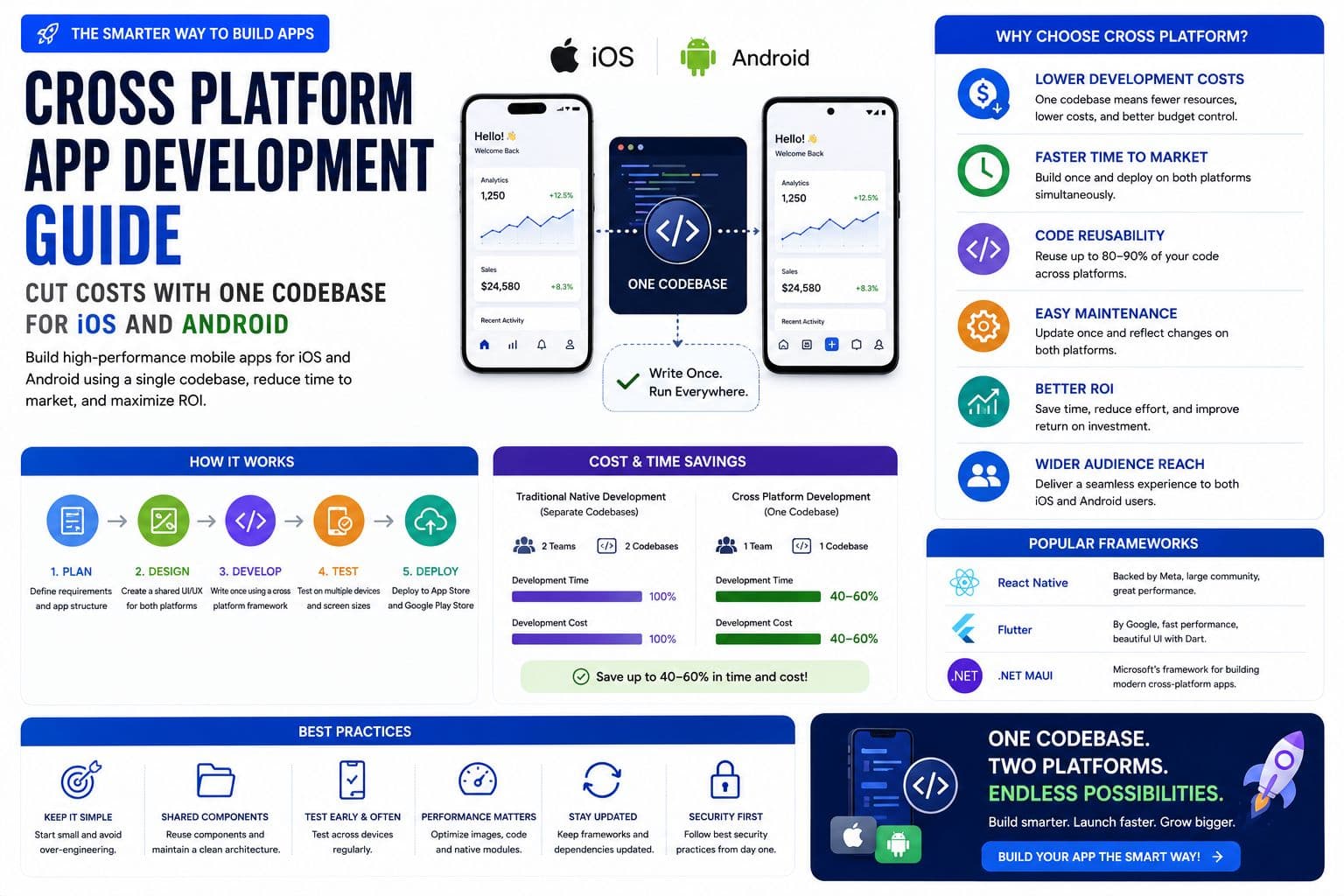
When teams ask for a cross platform app development guide to cut costs with one codebase for iOS and Android, the real challenge begins after the decision is made. In live projects, the promise of a single codebase often collides with the reality of platform-specific behavior, device fragmentation, and backend integration differences that can quietly consume the projected budget savings. And honestly, that's usually around week three or four when reality sets in.
What "One Codebase" Really Means in Daily Delivery
In practice, a single codebase for iOS and Android means you are managing one source of truth for business logic, but you are still dealing with two distinct operating systems, two app store review processes, and two sets of user expectations. A common operational detail teams overlook is that while UI components may be shared, native modules for camera, push notifications, or biometric authentication often require platform-specific bridges that must be maintained and tested on both sides. It's not that these are impossible, but they tend to multiply quickly if you're not careful about what you're committing to early on.
Live Project Reality: Where the Cost Savings Go
The anticipated reduction in development hours is real, but it is often offset by extended QA testing cycles. For example, a minor update to a third-party library can break the Android build while leaving iOS untouched, leading to release management delays that push the delivery timeline. We saw this happen recently with a dependency that forced a full weekend of debugging just to isolate the exact version mismatch. Teams frequently underestimate the time required for integration architecture reviews to ensure that the shared codebase does not introduce performance bottlenecks on lower-end Android devices, which is where the experience gap really shows up.
The Hidden Risk: Misjudging Workflow and Boundary Limits
The most common misunderstanding is that a cross platform app development guide guarantees a smaller team. In reality, you still need specialists who understand the underlying native platforms to debug odd crashes or to optimize rendering performance. This approach stops scaling when your product demands heavy use of device-specific features, such as advanced AR filters or complex sensor data processing, where the cost of abstraction can outweigh the benefit of code sharing. I've sat in enough sprint reviews to know this is where the optimism fades and the real budget conversations start.
Need Bringmark's engineers to implement this for you?
Get a free 30-minute architecture & growth review tailored to your stack.
How to Decide if a Single Codebase is Right for Your Project
To decide, you need to assess your workflow dependency: if your team is comfortable with frequent dependency upgrades and has a robust CI/CD pipeline for DevOps practices, the risk is manageable. Otherwise, the hidden maintenance and debugging cost can erode your initial savings. A boundary for this decision is when your app's core value depends on a seamless native experience, such as high-performance gaming or complex data visualization. In those cases, the integration risk may be too high. Engaging a team with cross-discipline execution experience, like BringMarks mobile development experts, can help you evaluate whether the shared codebase will serve your long-term product roadmap or become a technical debt anchor. Sometimes an outside perspective catches what the internal team is too close to see.
FAQ
q: How much can you really save with a cross platform app development guide?
a: Savings are typically in development time, not total project cost. You can save 30-40% on initial coding, but this is often balanced by increased QA and integration testing that can eat into the timeline. The real savings depend heavily on how disciplined you are about defining what stays shared versus what gets natively built.
q: What are the common causes of deployment delays in cross platform apps?
a: A major cause is dependency conflicts that affect one platform but not the other. For example, a library update can pass iOS tests but fail on Android due to different memory management, leading to last-minute code changes and rework. Another one that comes up a lot is notification handling behaving differently in background states, which only surfaces during device testing.
q: When does a single codebase start to fail for scale?
a: It fails when you need deep integration with hardware features like Bluetooth or advanced gyroscopes on a large scale. At that point, the abstraction layer adds overhead that creates latency and performance issues, making native modules necessary. The threshold varies per project, but once you're doing heavy sensor or device-level work, you'll feel it quickly.
q: How do we avoid cost overruns on a cross platform project?
a: You avoid overruns by defining the boundaries of the shared code from the start. Decide which parts of the app are 'core logic' and which are 'platform-specific,' then allocate budget for maintaining the native bridges separately. This prevents scope creep from turning into hidden costs. In this situation, engaging with a specialized partner like bringmark can provide the necessary governance to keep the project on track and stop small decisions from compounding into major budget issues later.
The core engineering, AI, cloud, and product development team at Bringmark Private Limited. We architect and operate production SaaS platforms, enterprise web applications, and resilient cloud infrastructure.