Docker Containerization Platform Guide: Reduce Risk Before Scaling
Key Takeaway (TL;DR)
Docker Containerization Platform Guide: Reduce Risk Before Scaling Using a Docker containerization platform guide is essential for reducing deployment risk before scaling your software delivery pipeline. A common oversi
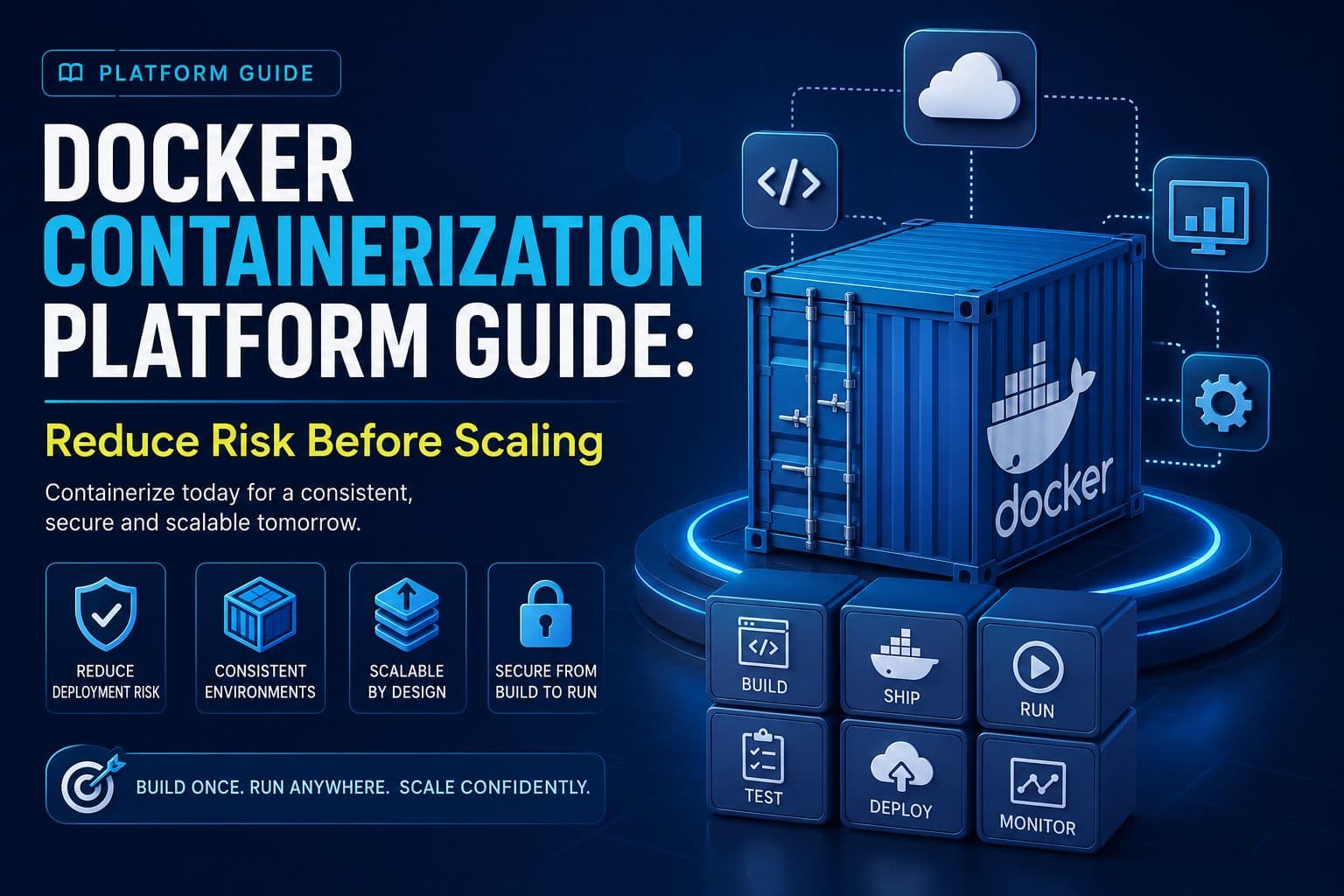
Using a Docker containerization platform guide is essential for reducing deployment risk before scaling your software delivery pipeline. A common oversight in live projects is assuming containerization alone solves environment drift — when in reality, misconfigured Dockerfiles often introduce subtle integration surprises during handover from development to operations. It's not always obvious until someone's debugging at 2am.
What Containerization Risk Looks Like in Real Delivery
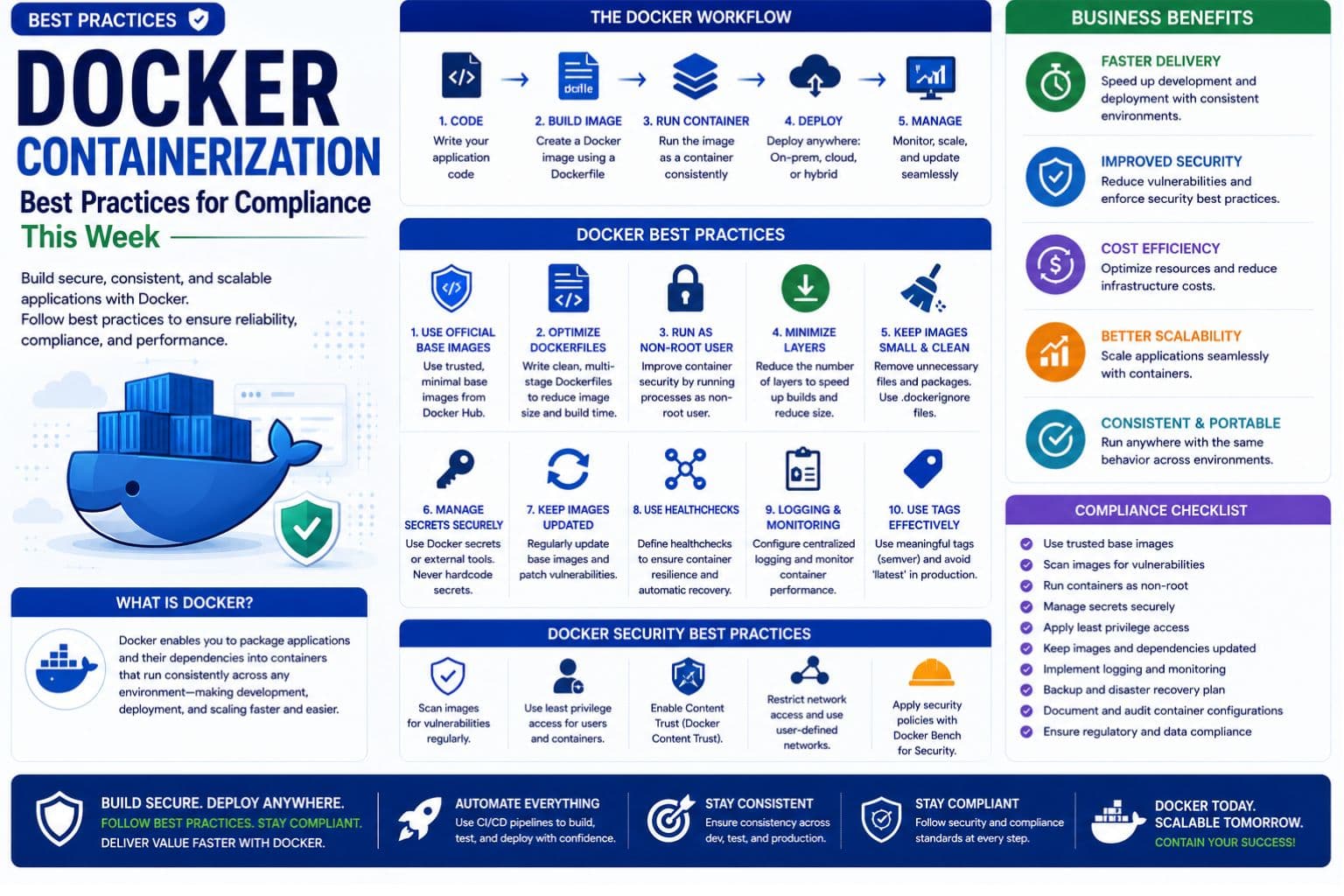
In real delivery, a Docker containerization platform guide helps teams see that risk isn't just about image size or build speed. The non-obvious operational detail teams often overlook, and I've seen this firsthand on a few projects, is that inconsistent base image versions across microservices create dependency conflicts that only surface during integrated QA testing cycles, forcing rollbacks. And those rollbacks? They're never quick.
What Actually Happens When You Scale Containers Without Guardrails
When teams scale containers without guardrails, the boundary where this approach stops scaling is reached once orchestration complexity outpaces deployment scripting. A real-world delivery observation shows that missing readiness probe configurations in Kubernetes manifests frequently causes cascading failures — invisible in staging but catastrophic in production cloud infrastructure. One team I worked with lost a whole afternoon to a single missing liveness check.
Common Misunderstandings That Cause Container Deployment Failure
A common misunderstanding causing bad decisions is that developers treat the Docker containerization platform guide as a packaging checklist rather than a runtime contract. One workflow dependency teams frequently overlook — and this keeps biting people — is that network policy and storage volume configurations differ between local Docker Compose setups and production orchestration layers like Kubernetes, leading to integration architecture surprises mid-release. It's the kind of thing that makes you question your life choices.
Need Bringmark's engineers to implement this for you?
Get a free 30-minute architecture & growth review tailored to your stack.
How Teams Make Smarter Decisions About Containerization Scope
To decide scope and next steps, teams must evaluate whether their devops pipelines support container health monitoring and automated rollback before expanding microservices. The compliance or governance concept that often gets missed is that container image provenance matters for audit trails, especially when third-party registries introduce unverified layers. A scale constraint emerges when teams try to run stateful workloads in containers without understanding persistent storage limitations, which creates release management friction that bringmark addresses through cross-discipline execution hardening. Honestly, it's one of those things you don't think about until it breaks.
FAQ
q What is the main risk when using a Docker containerization platform for the first time?
a The main risk is assuming containerized environments eliminate all deployment variability, while in practice, misconfigured networking and volume mounts cause integration failures that are hard to debug in production.
q How does a Docker containerization platform guide reduce deployment failures?
a It reduces failures by enforcing standard practices for base image selection, layer caching, and health check definitions that prevent common issues missed during local development and staging testing.
q When should teams stop scaling containers and reassess their infrastructure approach?
a Teams should stop scaling when orchestration complexity exceeds their operational capacity, evidenced by repeated deployment rollbacks, unmonitored resource contention, or inability to trace service dependencies across clusters.
q What decision criteria help teams choose between containers and alternative deployment methods?
a Key criteria include workload statefulness, team devops maturity, compliance requirements for image auditing, and whether the application architecture already aligns with microservices integration patterns that benefit from container isolation.
The core engineering, AI, cloud, and product development team at Bringmark Private Limited. We architect and operate production SaaS platforms, enterprise web applications, and resilient cloud infrastructure.