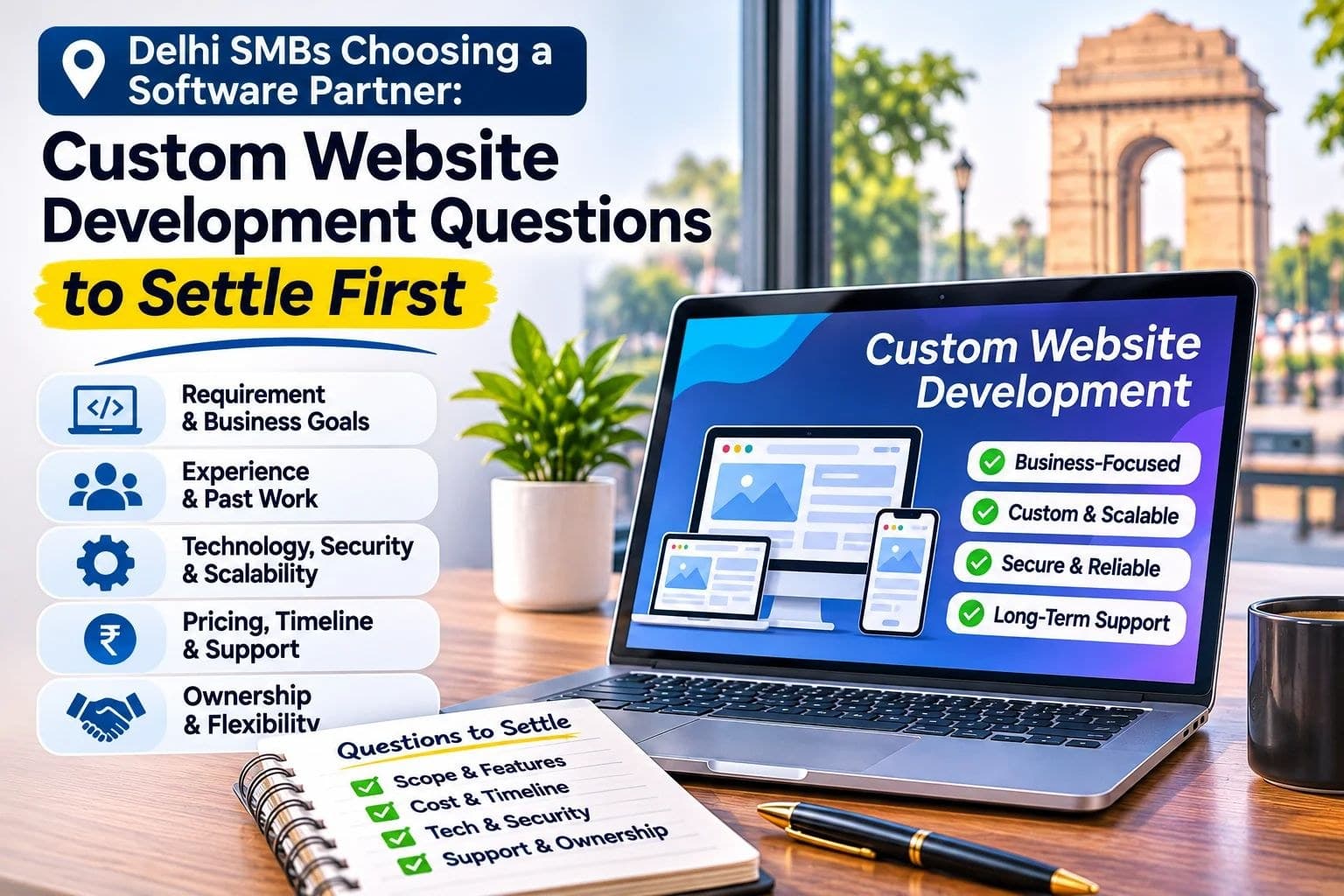
Najafgarh Operations Teams Reviewing a Website Rebuild: CMS and Hosting Questions to Ask Before Committing
Key Takeaway (TL;DR)
Najafgarh Operations Teams Reviewing a Website Rebuild: CMS and Hosting Questions to Ask Before Committing A website rebuild should be settled on five things before you sign: who edits and approves content, who owns the
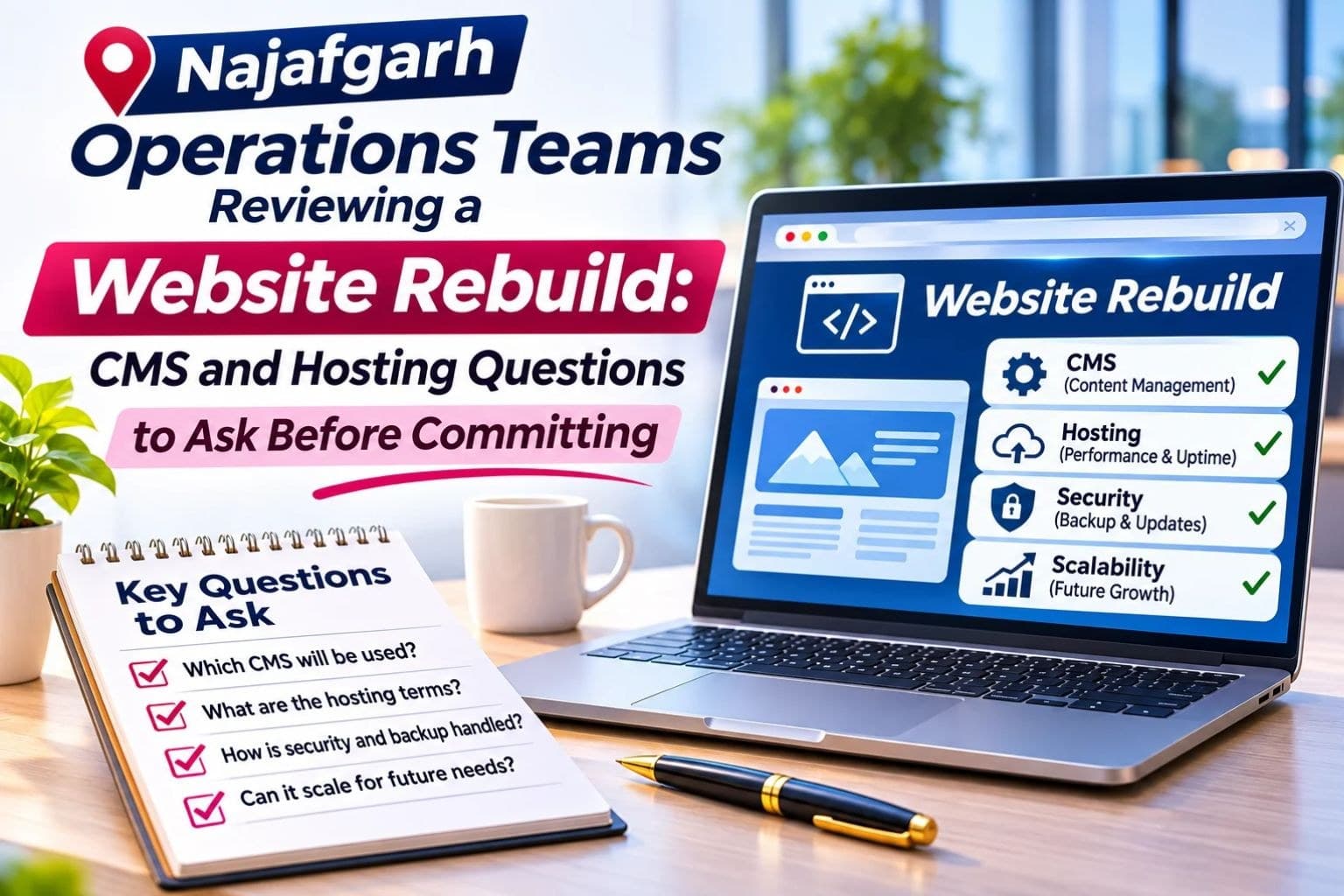
A website rebuild should be settled on five things before you sign: who edits and approves content, who owns the hosting and access, how backup and rollback work, what exactly migrates, and who supports the site after launch. Get plain answers to those and the design debate becomes much easier. For operations teams in Najafgarh weighing rebuild proposals, the practical outcome is a written scope you can hold a partner to, which is why a custom web development engagement is best discussed around content ownership and deployment access before any wireframe is approved.
What should you audit about the current site before scoping a website rebuild?
Start by listing what the current site actually does, not just how many pages it has. A rebuild checklist that counts pages but ignores behaviour leaves the new build guessing.
Make a redirect map: a plain list of every old web address and where it should point after the rebuild, so existing visitors and links still land in the right place.
Inventory form handlers, analytics events and third-party scripts, and note which ones must keep working on day one.
Note who currently publishes pages and what approval they need before content goes live.
Confirm where the domain is registered and who can change its records, since that control shapes the whole migration.
How do you choose a CMS around the people who will edit content?
Pick the CMS around the editors, not the demo. Content approval means the named steps a page passes through before it goes live, and it should match how your team already works.
Ask who can publish, who can edit, and who can approve, then check the proposal shows those roles.
Confirm what a non-technical editor can change without help, and what still needs a developer.
Ask how content types are structured, so pages can be reused rather than rebuilt each time.
Request a short editing walkthrough before signing, not after the build.
Need Bringmark's engineers to implement this for you?
Get a free 30-minute architecture & growth review tailored to your stack.
Who should own hosting, backups and deployment access?
Ownership should sit with your organisation, with access handed over at launch. Deployment credentials are the logins used to publish changes; if only the partner holds them, you depend on them for every update.
Confirm the domain registrar, DNS records, hosting account and security certificate are in your organisation's name.
Ask who performs a test restore and how often, and treat backup cover as unconfirmed until that is written down.
Ask for the rollback steps in plain language: how the site returns to the previous working version if a deploy fails.
Raise any data residency or governance requirements as questions for the partner to confirm in writing, rather than assuming a default answer.
What migration scope and rollback planning should be agreed before the build starts?
Migration scope is the fixed list of what carries over: content, web addresses, images, documents and integrations. Agree it as a deliverable, not a promise made on a call.
Get the redirect map and integration inventory signed off before the build begins.
Agree the order of the switchover, including when email records and certificates are checked.
Name the person on each side who can approve a rollback, and the point at which it is triggered.
Set the post-launch support terms: who fixes broken pages, who patches the CMS, and for how long.
Questions to settle before you commit
Use this short list in your next proposal review. If an answer is missing, ask for it in writing before any deposit moves.
Scope on paper: who owns the domain, hosting account and deployment credentials after launch?
Editing test: can the people who publish weekly do so without a developer?
Recovery check: who runs the test restore, how often, and where is that recorded?
Migration list: is there a signed redirect map and integration inventory?
Support terms: what is covered after launch, by whom, and under what timeline?
Governance: which data residency or audit questions have been confirmed in writing?
Write the answers into the contract. A rebuild is easier to live with when the control stays with the team that runs the site every day.
The core engineering, AI, cloud, and product development team at Bringmark Private Limited. We architect and operate production SaaS platforms, enterprise web applications, and resilient cloud infrastructure.