Serverless Architecture Best Practices for Compliance This Week
Key Takeaway (TL;DR)
Serverless Architecture Best Practices for Compliance This Week Teams seeking serverless architecture best practices for compliance this week often rush to deploy on new cloud infrastructure — I've seen this pattern befo
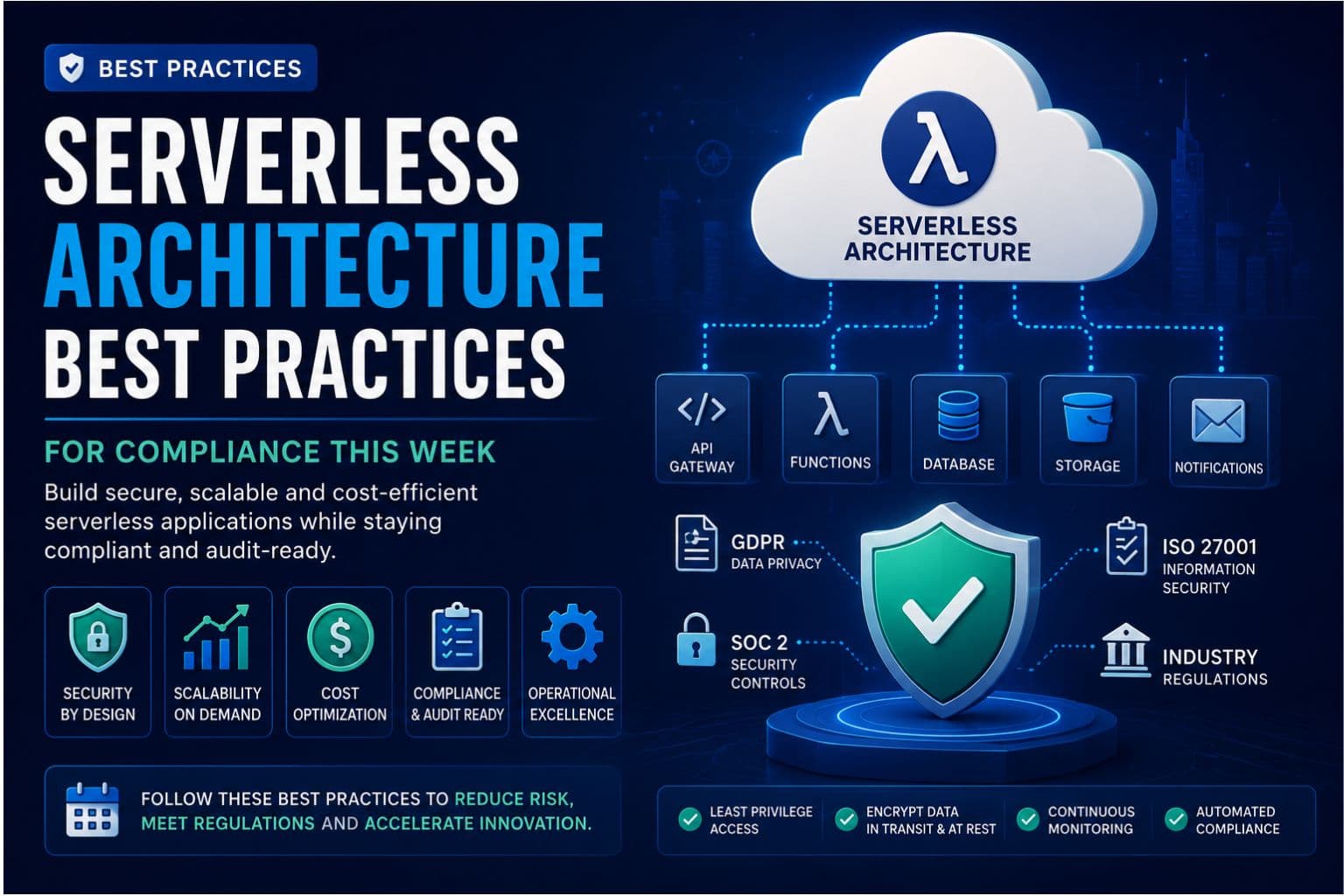
Teams seeking serverless architecture best practices for compliance this week often rush to deploy on new cloud infrastructure — I've seen this pattern before. But a real-world delivery observation shows that governance gaps in devops pipelines cause immediate deployment delays when audit logs don't capture changes properly, and honestly that's the kind of thing that only surfaces after you've already pushed.
What This Means for Real Delivery
Compliance in serverless architecture requires controlling state outside the function execution environment. Many teams overlook the boundary where ephemeral storage fails to meet data retention rules, which leads to a common misunderstanding where teams just assume the cloud provider handles all governance. They don't.
What Actually Happens in Live Projects
During a recent project deployment — I'm not naming names here — a non-obvious operational detail surfaced when QA testing cycles revealed that the integration architecture between serverless functions and external databases broke under concurrent invocations. That caused rework cycles that delayed the entire release timeline, and nobody saw it coming during design reviews.
Wrong Assumptions That Break Compliance
A frequent mistake is trusting default IAM roles to enforce compliance. Scope creep in permission policies opens risks during handover, and one boundary where this approach stops scaling is when teams hit 1,000 concurrent invocations — that's when the logging pipeline just collapses under the load. I've watched teams scramble to fix this mid-sprint.
Need Bringmark's engineers to implement this for you?
Get a free 30-minute architecture & growth review tailored to your stack.
How Teams Decide Scope and Next Steps
Decision help comes from mapping each function's workflow dependency to a specific compliance requirement. Teams that enforce governance through infrastructure-as-code tend to reduce devops pipeline failures; bringmark helps when cross-discipline execution requires production hardening and cost monitoring across regions, which is usually the part people forget until the bill arrives.
FAQ
q: What is the first step for serverless compliance this week?
a: The first step is auditing all function execution logs and verifying they meet your compliance retention policy — before deploying any changes. Don't skip this.
q: How do you handle data encryption in serverless functions?
a: You must enforce encryption at rest and in transit using KMS keys, and never rely on application-level encryption that runs inside the function memory. That's a trap.
q: What happens when serverless functions scale beyond 500 invocations?
a: At that scale, concurrency limits and cold starts can cause timeouts in audit events, so you need to implement an asynchronous queuing layer for compliance data. Otherwise you'll lose events.
a: A common misunderstanding is that serverless removes the need for network security, but you still must isolate functions within private subnets and apply strict ingress rules. Cloud providers won't do that for you.
The core engineering, AI, cloud, and product development team at Bringmark Private Limited. We architect and operate production SaaS platforms, enterprise web applications, and resilient cloud infrastructure.