Sultan Pur Majra SMBs Choosing a CMS: Editing, Hosting and Handoff Questions First
Key Takeaway (TL;DR)
Sultan Pur Majra SMBs Choosing a CMS: Editing, Hosting and Handoff Questions First Sultan Pur Majra SMB owners and operations leads choosing a CMS should settle six things before signing: who can edit and publish, how fl
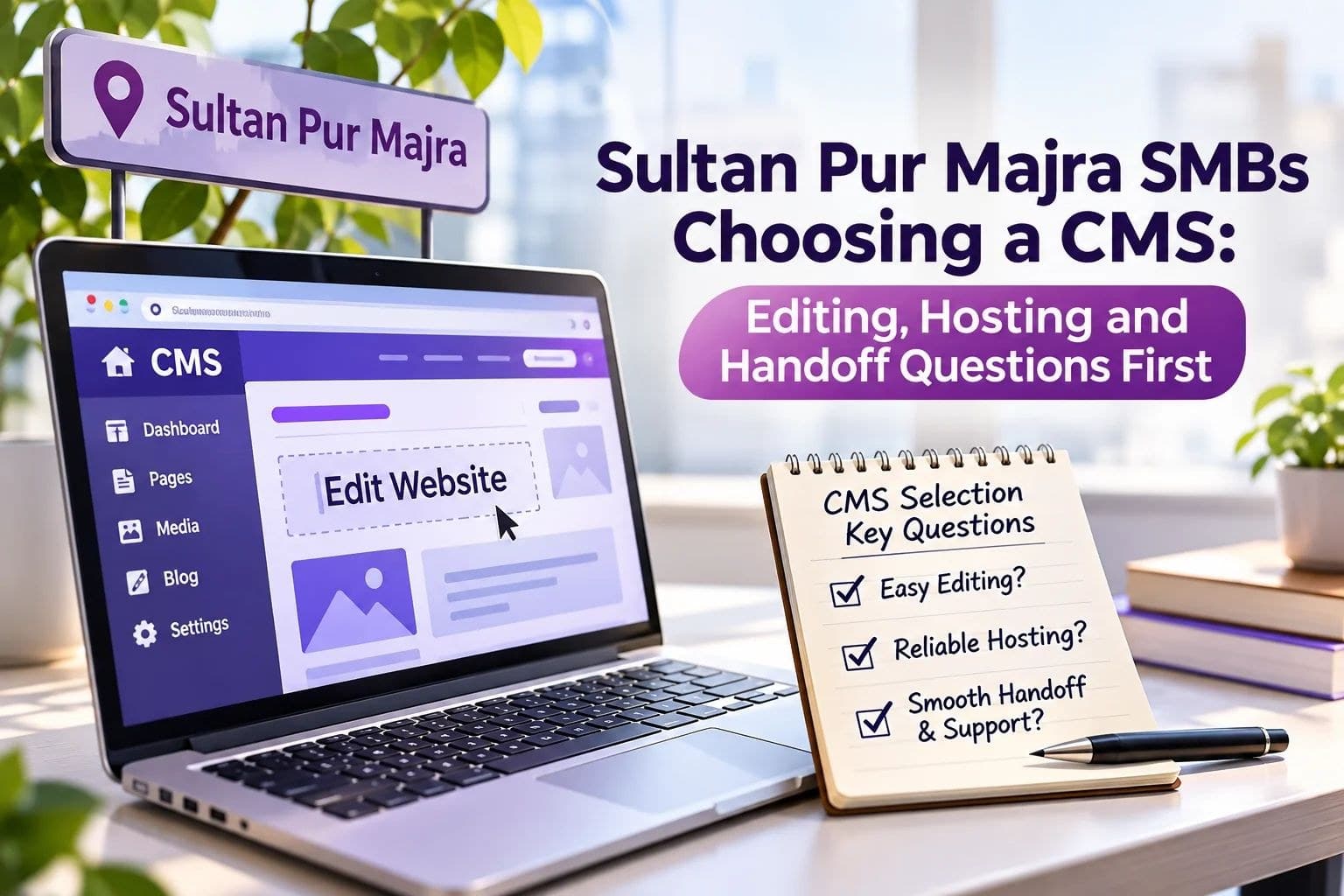
Sultan Pur Majra SMB owners and operations leads choosing a CMS should settle six things before signing: who can edit and publish, how flexible the content model is, who owns the hosting, how backup and restore work, what a content export looks like, and what gets handed over in writing. Get those answers in the contract and the build ends cleanly. Leave them vague and every small content change turns into a support ticket.
The terms are simple enough. Role permissions mean which people can draft, publish and approve. The content model is how pages, blocks and fields are structured. Export means pulling your content and media out in a usable file. Backup and restore means getting the site back after something breaks.
This guide is written for teams in Sultan Pur Majra and around Delhi who run a content-heavy website. Bringmark publishes it as general guidance; it does not imply any office, partner or client in the area.
What editing workflow questions should Sultan Pur Majra SMBs ask first
Start with the people who will actually touch the site, not the features list. If two staff members publish weekly and a manager approves, that is the workflow you must be able to configure. Ask the partner to describe, in plain words, how a new landing page moves from draft to live and who can approve it.
Ask how many content items you expect each week without developer help. Ask whether reusable blocks and a limited editor role exist on the tier being quoted. Ask what happens to an edit that is half finished when someone else opens the same page. Ask where draft preview lives, and whether preview shows the same layout a visitor sees.
Also ask for a short walkthrough recording and a written role matrix naming who can publish, approve and roll back. A partner who can answer these plainly has usually done the work before.
How should hosting and ownership be settled before you sign
Hosting is a governance question as much as a technical one. Ask whether the CMS runs on your own cloud or server account or on the vendor's managed platform. Ask whose name appears on the hosting account and the domain, and who holds admin credentials on day one.
If the CMS sits on a managed platform, ask what export rights you have and what happens to the site if you stop working with this partner. That is not a prediction of trouble; it is simply the exit you should be able to price before you enter. If content governance covers audit trails or several publishing teams, ask how those are logged and who can read the logs. Frame it as your own questions, not as a legal opinion.
Ask too whether the quoted hosting tier still supports the role model promised in the proposal. Tier limits are a common place where an editing promise quietly shrinks.
What migration and handoff details belong in the contract
Treat migration as a question about structure. Ask how the build will store pages, blocks and fields, and whether those can be read by a different CMS later. Then ask for something concrete: a sample export of a few pages and their images before you sign, so you can see what you would actually receive.
Need Bringmark's engineers to implement this for you?
Get a free 30-minute architecture & growth review tailored to your stack.
Ask for a database dump, source code access and admin credentials with a named date. Ask who retires the staging environment and when. Ask how migration away from the chosen CMS would be scoped, and whether the partner offers that work at all.
A simple test of handoff quality: ask the partner to show you, on a comparable build, how an editor publishes a page without help. You do not need to see a client's confidential login; a recorded walkthrough or a staging demo on their own sample site is enough to answer the question.
Which decision checklist keeps the CMS choice grounded
Group your questions into four blocks and get written answers to each. Teams that do this usually find the shortlist narrows on its own, because a partner who cannot answer the export and ownership questions is not offering the same thing as one who can.
Editing workflow: who drafts, who approves, who publishes, how rollback works, and how many items per week go live without a developer.
Content model: how pages and reusable blocks are structured, and whether the structure survives a move to another system.
Hosting and ownership: whose account hosts the site, who holds credentials, and what export rights exist on a managed platform.
Backup and restore: how often backups run, where copies are stored, and how a restore is tested rather than assumed.
Migration export: a sample content and media export you can inspect before signing.
Handoff documentation: source code, database dump, credentials, and a named handover date.
Pair that list with a look at the website development work and the self-hosted website and app infrastructure pages to see how scope and ownership are usually described. If you expect to run your own server, the own server setup for business in India page covers the hosting side.
Practical checks to run before you commit
Write the role matrix down. If the proposal only names admin and editor, ask for the approval step and the rollback step in writing before go-live.
Request a sample export. A few pages plus their images is enough to show whether your content comes out in a usable shape.
Ask for a restore test, not a promise. Find out when a backup was last restored and what the result looked like.
Check who owns the hosting account. Your company name on the account is the clearest sign of ownership.
Keep the handover list short and dated. Source code, database dump, credentials and a named person for questions.
Next step: turn these into a one-page checklist, send it to each shortlisted partner, and compare the written answers side by side before you sign anything.
The core engineering, AI, cloud, and product development team at Bringmark Private Limited. We architect and operate production SaaS platforms, enterprise web applications, and resilient cloud infrastructure.