F F C Okhla SMBs Moving Sales Online: E-commerce Scope and Stack Questions Before You Commit
Key Takeaway (TL;DR)
F F C Okhla SMBs Moving Sales Online: E-commerce Scope and Stack Questions Before You Commit If you run an SMB in F F C Okhla and you are moving sales online, settle four things in writing before you sign: catalogue, pay

If you run an SMB in F F C Okhla and you are moving sales online, settle four things in writing before you sign: catalogue, payment and fulfilment scope; whether a platform or a custom build fits; how integrations and customer data will be owned; and what launch readiness and maintenance actually include. Get those on paper and you will hit far fewer surprises. Skip them, and the gaps usually surface after money has been committed.
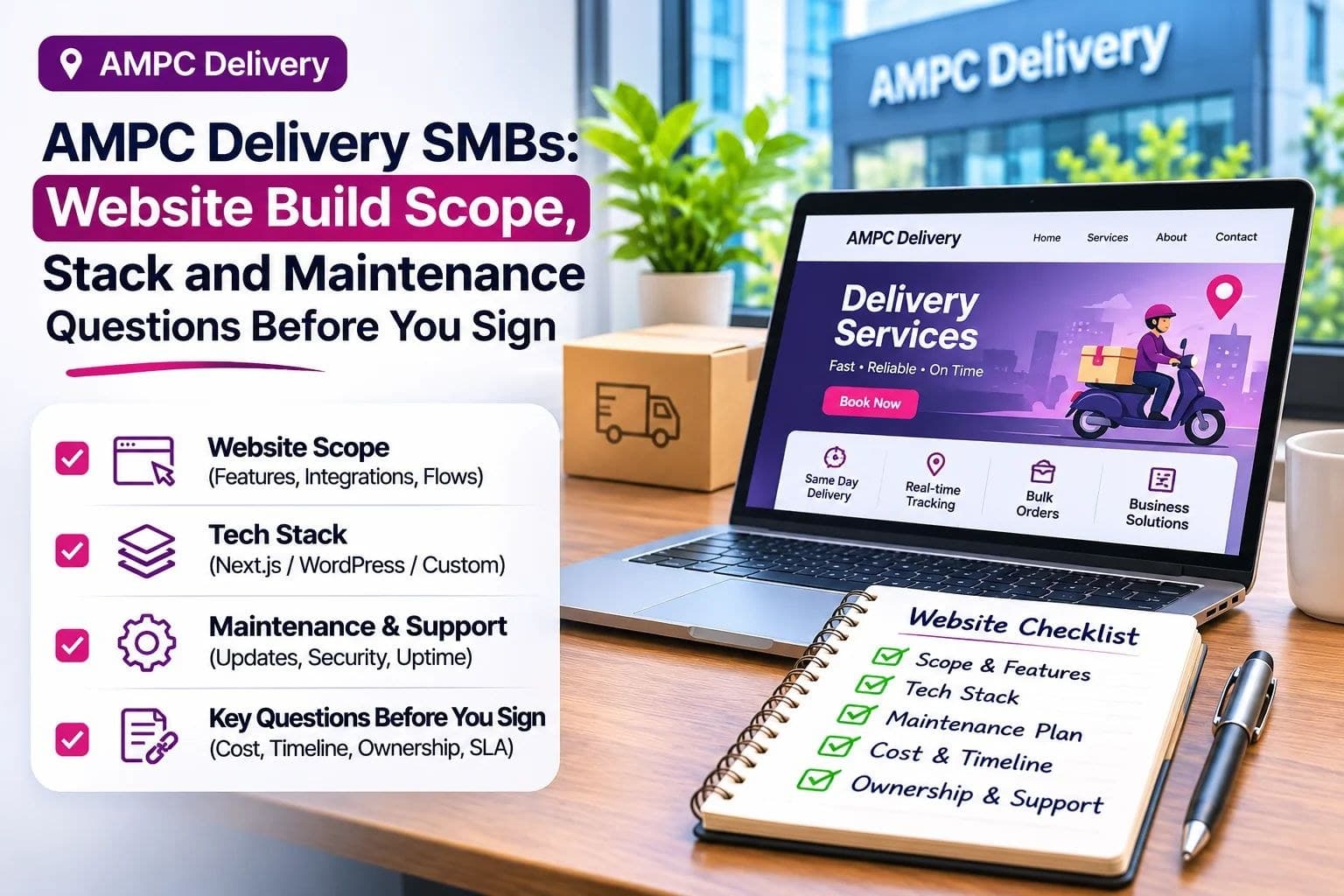
A quick checklist to carry into any vendor conversation:
Who cleans and owns the product catalogue?
Which payment options are required at launch, and who handles onboarding?
How does a confirmed order reach dispatch or a courier?
Which inventory or accounting systems must stay in sync?
Who holds customer records and order history if the relationship ends?
What do updates, security patches and support response times cover?
Catalogue, payments and fulfilment scope: what has to be settled first
Scope starts with the data, not the design. An online store is a catalogue system, a checkout and payment path, and a fulfilment process that has to agree with each other.
The practical rule for an F F C Okhla business is simple: clean the product data before choosing the stack. Inconsistent sizes, missing images and unclear pricing will follow you onto any platform. Payment onboarding is usually the second delay, because merchant approval sits on someone else's timeline. Fulfilment is the third, and it is the one most often left out of the first draft. Ask early how a confirmed order becomes a pick list, a dispatch note or a courier booking, and who is responsible for that handoff.
Platform vs custom build: how to judge which one fits
Neither route is automatically faster. The fit depends on how much of your selling journey is standard and how much is your own.
If your catalogue, pricing and order flow look like most retailers, a hosted platform may cover the basics with less initial work. The questions worth asking are about limits rather than features: what happens to costs and exports as order volume grows, and how easily can you move data out later. A custom build makes more sense when ordering rules, pricing logic or integrations are genuinely different from the norm. The risk there is scoping a full build before the catalogue and order flow are stable enough to model. In both cases, write the boundary down. Treat the web development scope as a list of what is in and what is out, not a rough estimate.
Need Bringmark's engineers to implement this for you?
Get a free 30-minute architecture & growth review tailored to your stack.
Integration and data ownership questions to ask
Most post-launch pain sits at the seams between systems, so name each seam and ask who owns it.
For inventory and accounting, ask which systems must stay in sync, how often, and what happens when a sync fails. For dispatch, ask how order confirmations reach the warehouse or courier partner and who monitors that queue. For reporting, ask how daily sales figures reconcile with your accounting records and which side is treated as correct. On ownership, the questions are blunt: who holds the customer records and order history, can you export them in a usable format, and what happens to that data if you change provider. A provider with a managed-review workflow will usually spell these out in the contract. Get the same detail in writing from anyone you consider. Bringmark publishes this checklist, and its custom software team is one route among others if you need integration work planned.
Launch readiness and maintenance terms worth reading twice
Launch is a sequence, not a date. Before go-live, confirm that test orders run end to end, that payment failures are handled, and that someone is on call for the first trading days.
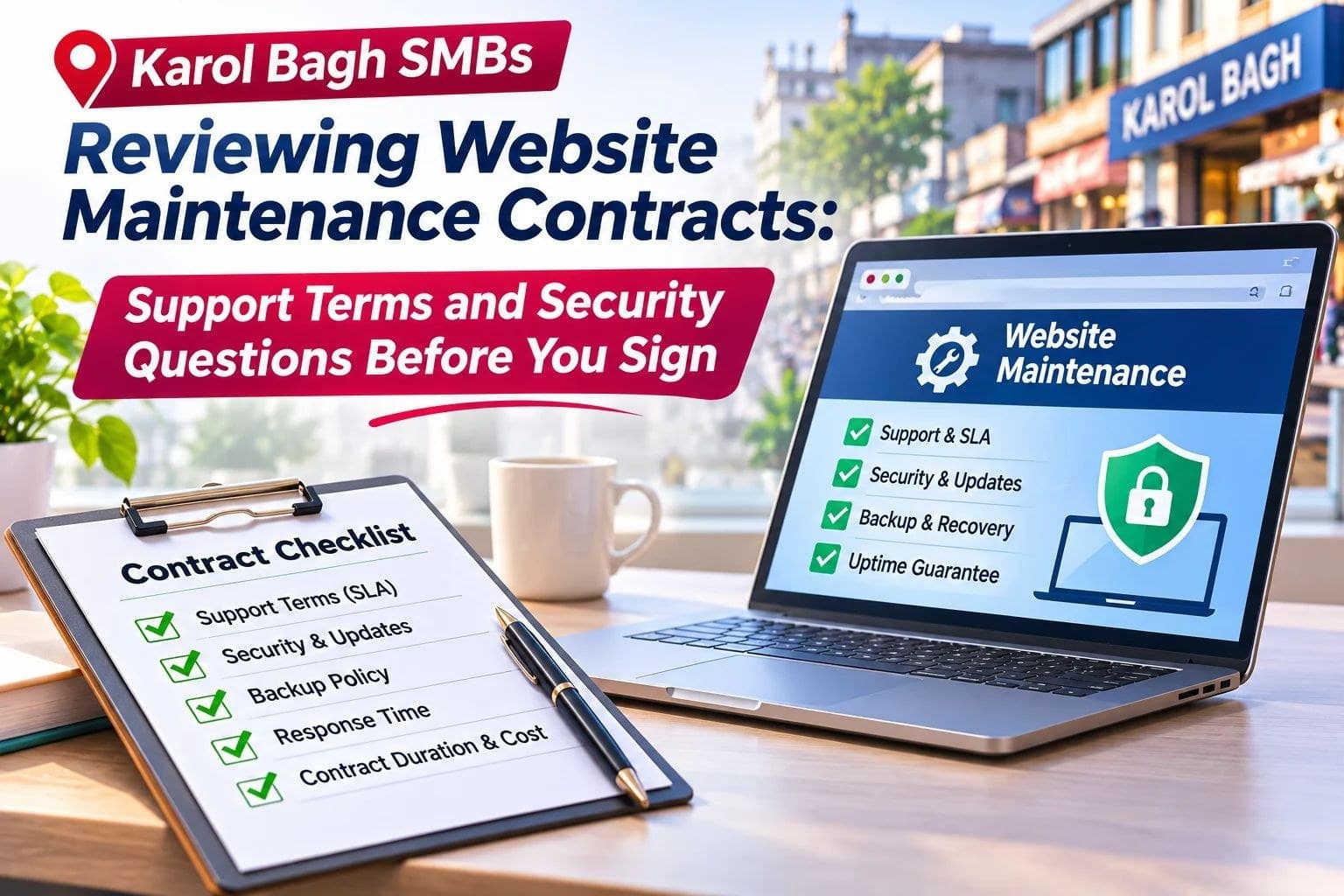
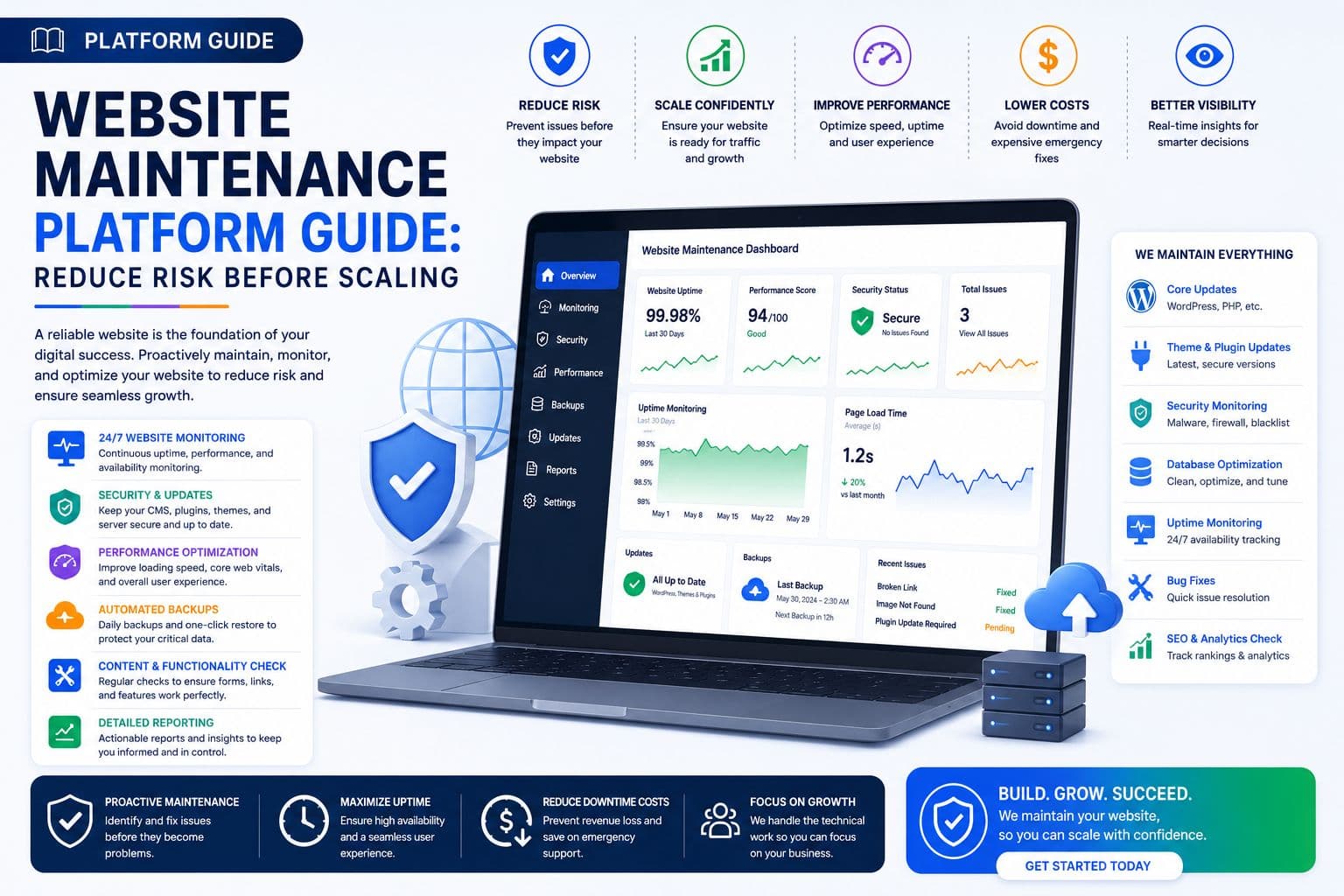
Maintenance belongs in the first conversation, not the renewal one. Ask what routine updates cover, who applies security patches, and how quickly support responds during trading hours. If you host your own setup, the same questions apply to servers and backups. Keep the answers short and specific, and make sure the person who will actually do the work is named, not just the sales contact.
What to settle before signing
Hold one review meeting and close each of these before any signature.
Catalogue and payments: who cleans the product data, which payment methods are required at launch, and who owns the approval timeline?
Platform or custom fit: which parts of your order flow are standard, which are different, and what are the volume and export limits?
Integration and data ownership: which systems sync, who watches each handoff, where does the data live, and how do you export it?
Launch and maintenance: what must be true on go-live day, what does support cover, and who responds when something breaks?
Write the answers into the contract, attach a simple owner-and-deadline list, and keep a copy with your project records. That one habit removes most of the scope surprises that slow a first online season.
The core engineering, AI, cloud, and product development team at Bringmark Private Limited. We architect and operate production SaaS platforms, enterprise web applications, and resilient cloud infrastructure.