Vulnerability Assessment Case Study Guide for Better ROI Planning
Key Takeaway (TL;DR)
Vulnerability Assessment Case Study Guide for Better ROI Planning When a mid-sized financial SaaS company attempted to launch a new client portal, their vulnerability assessment revealed 14 critical flaws in the integrat
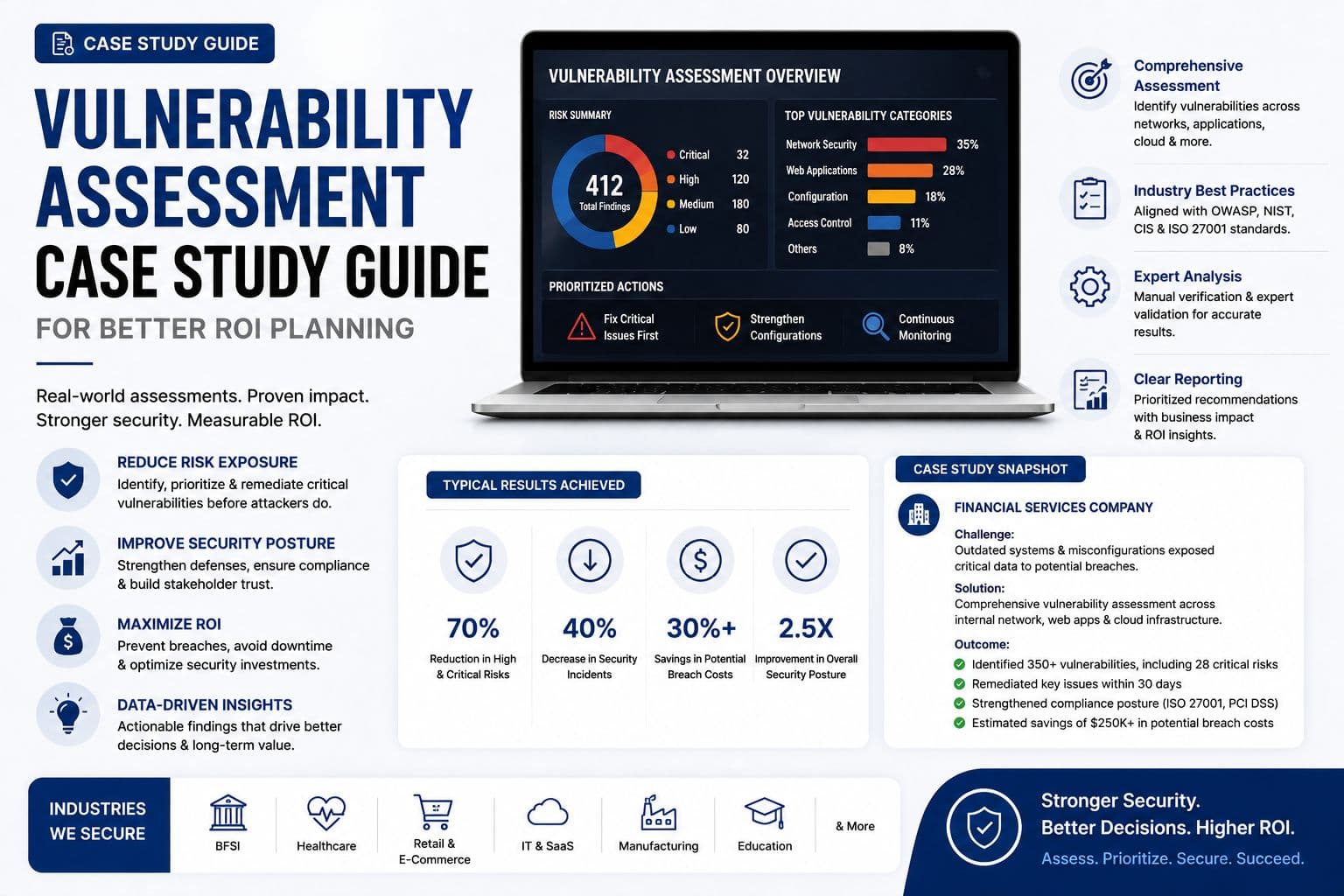
When a mid-sized financial SaaS company attempted to launch a new client portal, their vulnerability assessment revealed 14 critical flaws in the integration architecture that had been missed during initial QA testing cycles. This vulnerability assessment case study guide for better ROI planning shows how ignoring security checks at the planning stage leads to unplanned rework cycles, resource drain, and missed go-live dates that directly impact the return on investment for any software delivery project.
What a Vulnerability Assessment Means for Project Delivery
In real-world project deployment, a vulnerability assessment is not just a checkbox for compliance—it is a workflow dependency that determines whether your team can release code without breaking the client delivery timeline. Security scanning must be woven into every sprint, not treated as a final gate, because when you discover a critical flaw in the cloud infrastructure after weeks of development, the cost to fix it multiplies exponentially and forces you to revisit integration decisions you thought were settled.
What Actually Happens When You Skip Early Security Testing
In live production environments, teams often assume that their devops pipelines will catch security issues late in the cycle, but this is a common misunderstanding that causes bad decisions. During a recent project for a logistics client, the development team delayed vulnerability scanning until the day before the release, only to find that an outdated authentication module in the software delivery process would cause a complete handover failure, forcing a two-week rollback that burned through the entire contingency budget and eroded stakeholder confidence in the delivery team's ability to manage release management effectively.
The Mistake of Treating Security as a Cost Center Instead of an Investment
The primary risk is that finance teams view penetration testing and continuous monitoring as an expense line item rather than a mechanism to prevent cost overrun and scale issues, leading to underfunded security programs that fail to provide adequate coverage. This approach stops scaling the moment your application grows beyond a single team, because manual security reviews cannot keep pace with automated deployment frequency, and the governance concept of segregation of duties becomes impossible to maintain when the same engineers write code and approve security exceptions without independent validation.
Need Bringmark's engineers to implement this for you?
Get a free 30-minute architecture & growth review tailored to your stack.
How to Decide Whether to Build, Buy, or Partner for Security Testing
To make a rational decision about vulnerability assessment for better ROI planning, teams must evaluate the total cost of ownership of internal security tools versus partnering with specialists who already understand production hardening and cross-discipline execution across web development, cloud service, and data analytics environments. A non-obvious operational detail many organizations overlook is that the true cost of a security breach includes not just remediation expenses but also the downtime penalty clauses in client contracts and the lost opportunity cost of engineering hours diverted from feature development to patch management—this is where bringmark can provide context on how integrated delivery practices prevent these hidden failures during the handover phase.
FAQ
q: What is the primary benefit of conducting a vulnerability assessment before starting a software project?
a: The primary benefit is that it uncovers risks in the integration architecture early, allowing you to budget for remediation before scope creep inflates costs, which directly improves the return on investment by preventing expensive emergency fixes that delay delivery timelines and damage client relationships.
q: How does a vulnerability assessment impact the overall project budget for a mobile application deployment?
a: It impacts the budget by revealing the true cost of securing the application, which includes not only the scan itself but also the developer time required to fix identified flaws, and in many cases, this assessment prevents a massive budget overrun by identifying that the chosen third-party API cannot meet compliance standards without significant rework.
q: What are the common scale issues that arise when a vulnerability assessment is performed only at the end of a large-scale digital transformation?
a: The common scale issue is that the volume of findings becomes unmanageable, and the QA team is forced to triage threats in real-time, which creates a bottleneck where critical infrastructure flaws are missed while the team focuses on lower-risk items, ultimately causing a release management failure that cascades across the entire system.
q: How should a delivery manager use vulnerability findings to justify the need for a specialized security partner?
a: A delivery manager should use the findings to calculate the cost of in-house remediation time versus the faster response time of a partner with dedicated tools and expertise, and when the assessment reveals that security flaws are embedded deep in the integration layer, it is often cheaper to bring in specialists to harden the environment than to retrain existing staff, which is where bringmark's devops and cyber-security expertise can inform a more efficient approach to risk planning.
The core engineering, AI, cloud, and product development team at Bringmark Private Limited. We architect and operate production SaaS platforms, enterprise web applications, and resilient cloud infrastructure.