Nathupura Village SMBs: Website Maintenance Terms and Security Questions Before You Sign
Key Takeaway (TL;DR)
Nathupura Village SMBs: Website Maintenance Terms and Security Questions Before You Sign Before a Nathupura Village SMB signs a website maintenance contract, four things should be clear in writing: what the scope of supp
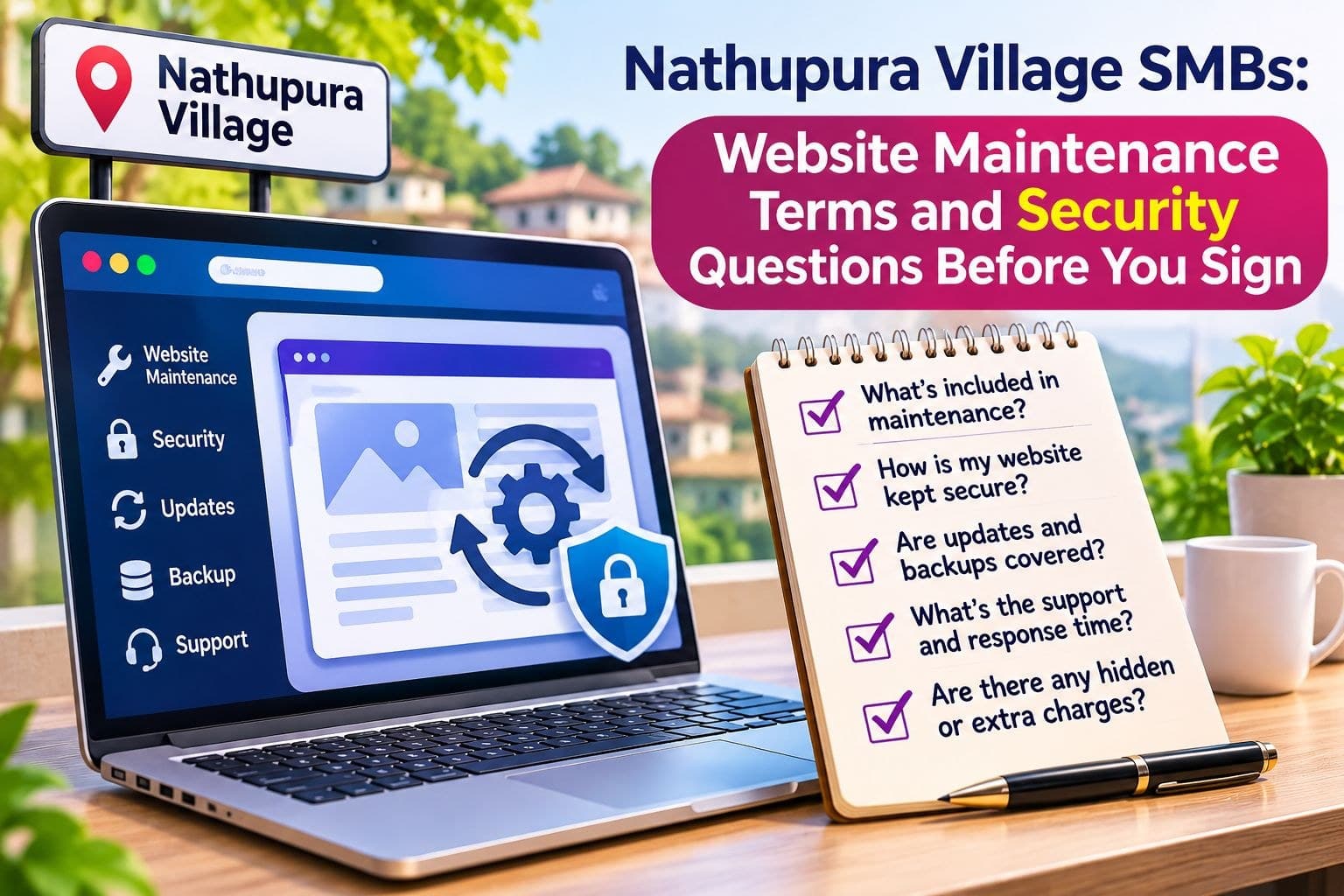
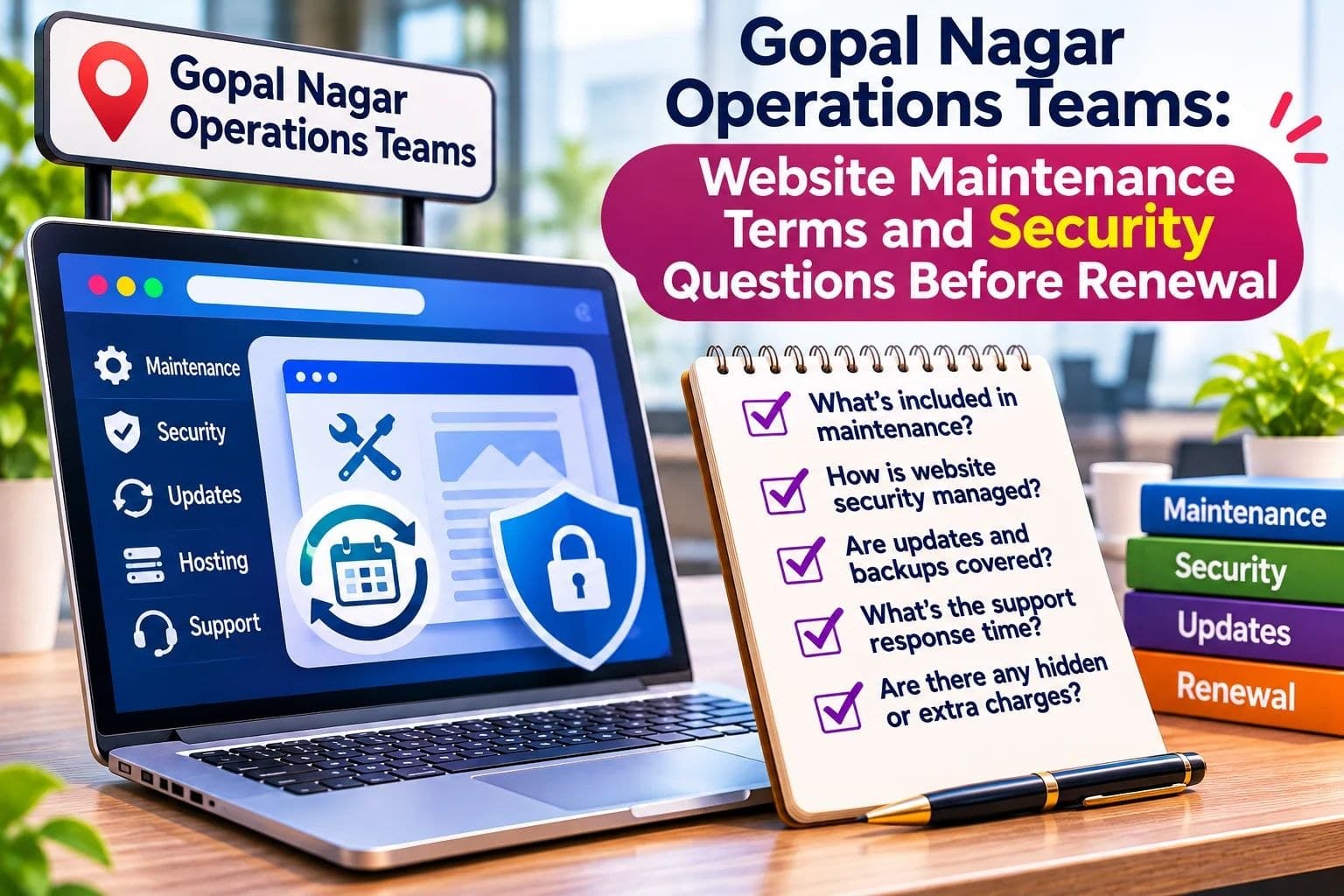
Before a Nathupura Village SMB signs a website maintenance contract, four things should be clear in writing: what the scope of support includes, what security audit evidence the maintainer can show, who owns the data and accounts, and how the handover works at exit. If any of those is vague, ask again before you commit. This guide is written as a set of questions you put to a prospective maintainer, not as a sales pitch.
What should a website maintenance contract actually cover?
Scope of support means the named list of tasks the maintainer is responsible for, in which environments, and on what schedule. Backup and recovery means both the routine copy of your site and database and the tested process for restoring them. Ask for both in plain words.
Which systems are covered: website code, database, hosting, DNS, email, plugins or third-party integrations?
Which environments are in scope: live only, or also staging and testing?
How often are updates applied, and who approves them before they go live?
When was the last restore actually performed into a working environment, and can the maintainer show the result?
What is explicitly out of scope, such as new features, new integrations or redesign work?
Which security and audit questions should you ask before signing?
A security audit is a scheduled review of your site and accounts for known weaknesses, with findings you can read. Ask for evidence rather than assurances.
What did the last security review cover, and can you see a summary of findings and fixes?
Who receives security alerts, and what is the named escalation contact?
Will you have access to access logs and error traces, or do they sit only in the maintainer's accounts?
Need Bringmark's engineers to implement this for you?
Get a free 30-minute architecture & growth review tailored to your stack.
Who rotates admin passwords, TLS certificates and API keys, and how often?
How are administrator accounts protected, and who holds the recovery details?
How is response time measured, and does the clock start at your first report or later?
What do handoff and data ownership terms need to say?
Data ownership terms should name each asset and who controls it. At exit, you should be able to walk away with everything you paid to build.
Are the domain, DNS, hosting and analytics accounts registered in your company's name?
Who holds the source code, and is it delivered to your own repository?
Can you export the full database and content in a usable format on request?
What happens at the end of the contract: notice period, final handover steps and a defined transition window?
Are credentials returned or transferred, and is that confirmed in writing?
How should Nathupura Village readers run the pre-signing review?
Treat the contract as a governance document. Compare any maintainer, including a vendor with a managed-review workflow, on the same neutral criteria: written scope, audit evidence, log access, ownership of accounts and assets, and exit conditions. Where your team needs custom website work, cloud setup or security hardening beyond routine upkeep, review Bringmark's private server and security hardening service against these same questions before you commit.
Get the scope of support in writing, including what is out of scope.
Ask for one real example of a completed restore, not a backup job report.
Confirm who owns the domain, hosting, analytics and source code.
Name the person who receives security alerts and the number to call.
Check that logs and error traces stay reachable by your team.
Write down the exit steps and the transition window before signing.
The core engineering, AI, cloud, and product development team at Bringmark Private Limited. We architect and operate production SaaS platforms, enterprise web applications, and resilient cloud infrastructure.